
When I was pregnant with Claudia, I started looking for a second-hand bedside cot. Since when I was a student midwife and I was wondering through the pages of the Leboyer masterpiece “Birth without violence”, I started to embrace the idea of the importance to give the baby a chance to find a personal space and comfort, of course after and besides the vital skin to skin moment. I was fascinated by the interpretation that Leboyer gives about baby’s adaptation to extrauterine space where the newborn, after having experienced and enjoyed the softness and concavity of the maternal abdomen learns to stretch and unfold its back on the flat surface of the mattress, gradually learning the air element and learning to find a new way to perceive and move their body in the space.

I liked the concept that baby is, from birth, entitled to their comfort zone and space away from the warmth and comfort of the parents’ body but close enough to hear and smell them, enough to feel safe and heard when needed.
So, I got my white wood and fresh cotton second hand bedside cot from a lovely local family and I proudly got it home, assembled and then, few weeks before Claudia was born, disassembled again and washed top to toe, ready for the brand-new organic material mattress to be taken out of the plastic and laid on it, ready to receive my little cub.
When Claudia was born, she was 2,960 kg. Since the very first breath she has been an alert and active little baby girl and she remained so throughout. Her body never felt floppy (apart from the heaven like deep snooze moments), instead, she would have a strong muscle tone, a very pronounced Moro reflex, and a wide range of movements including the capability to hold her head from the beginning of her life in this Heart. This meant that, when I was trying to lye her on the cot during the first 1-2 weeks, she would react as If she was a turtle lied upside down on the ground: she would retract her limbs and start rolling sideways, opening her blue-grey eyes a second after and staring at me with disappointment.
Obviously that space was too wide for her to start with, and that surface too cold, too hard, too flat to accommodate her curved little spine.
So here a fortunate charity shop deal came to play on our side: one of those mattresses with pillow circling the sides. She loved that one. The surface wasn’t that hard as the coconut fibre mattress and the space to be navigated by her tiny and unconfident body was not too wide and scary as the large cot. As midwives and health visitors came to visit me and found her peacefully asleep on that they very professionally started the plethora on how unsafe it was for me to let her sleep on that, listing me all the possible ways she could have managed to soffocate herself on it. Despite my sense of guilt was well nourished by those unrequested advices, my instinct and mother’s knowledge (also supported by the mattress label) was still telling me that it was okay.

As everything in newborn’s life: nothing lasts for very long, so the cocoon mattress got stored under the changing station and now gradually forgotten as Claudia doesn’t fit in it anymore.
Before having a baby, I never believed in the idea of rocking movement, I thought that babies don’t need to be rocked to sleep necessarily and that it would disturb them or making them more nervous. So, when my partner told me that we should have taken a rocking cot I was a bit sceptical. But then, since when she is here, I had to review my believes about it and I am now rocking pro, and I began to think it’s an essential element for babies’ comfort which explains why any adult has the innate instinct to start rocking immediately when holding a baby: it’s because it is exactly what they need! Movement, they need continuity from womb environment where everything was moving and sounds were on all the time. So, rocking it’s not spoiling but creating for them a comforting and reassuring space.

Being a woman suffering with anxiety, a mother at 35 years old and being a midwife working for the NHS was going to be the recipe for safe sleep matter to really matter; something that inevitably generated in me a lot of thinking and, of course, overthinking. The first thing I am going to share about it, it’s how annoying it feels when you say to people that you are a midwife and you are also becoming a mother and everyone says – oh wow, you must know everything-. That’s the issue, that’s the tricky part. You know things, often you know many things about some topics and, hopefully, you are very knowledgeable and UpToDate about childbirth and tips on growing a healthy child. But the reality is that what the NHS gives you is guidelines based on research results: things that you learn by heart and you teach parents to do because that is the best advice available. But my point is: the best advice available, is it also the best advice for my child? The moment I realized that most of the anxiety went away, because it was replaced by the realization that yes, that is the advice based on the best evidence available but my baby actually behaves “this way”, my baby actually is able to do “this” and is able to communicate “this” to me. The other most inspiring words that I received during a moment of total despair phone call, talking about managing to rest while Claudia was sleeping during the first two weeks of her life, came from a beloved friend which is not a midwife, nor a mother, just a person that knows human’s nature a lot: – If you are sure that she is able to call you when she needs you, that she will give you the signals, then, you see? Then you can trust her! –.
The moment I realized that I could trust my capability to observe my baby and assess her, and that my baby actually had some competences and a certain extent of autonomy and I could trust her, everything got a completely different colour and that overthinking was a bit reduced or, at least, it took a bit more sense.
So, what your midwife is going to tell you is: – Put your baby lying down flat on her back, feet touching the edge of the cot, blanket under the armpits and tucked under the armpits, temperature between 19 and 22 degrees, avoid falling asleep with baby on your chest, if you want to do co-sleeping do it the right way -. About the right way, there is a lot of conversation: whether putting baby on their back between parents ‘pillows, no duvets over them, no sleeping on pillows, no sleeping on cushions. Again, this might not always work but this is the recommendation that the mums are left with and expected to follow strictly but is that possible?
And, what if I don’t follow the rules? Will then I put my baby at risk of dying from SIDS?
Being a mother and having the privilege of growing my own child gave me a totally different prospective to rethink safe sleep.
First, every baby is different. So, to understand how my baby can sleep peacefully and safely so we, as parents can do the same, it means understanding my own baby features and needs.
Sleeping habits have a lot to deal with feeding and digestion, so understanding how baby is digesting is key to have clues about how to help baby to find the right position to be able to fall asleep and to maintain a comfortable sleep position. In my case, my baby would feed very quickly, my milk flow has always been fast and Claudia always had a strong rhythmical suction. As result, she would empty both breasts within 10-15 minutes maximum. Even though this might seem wonderful and make you think fantastic then she will be quickly full and ready for a snooze this is not quite the case! In fact, what these kind of quick feeders need is a lot of care during and after feeds: first of all she chocked quite easily so all my attention and eye contact is needed during feeds (not that I have never been tempted scrolling Instagram or watching documentaries missing the beauty of her eye contact while feeding. Second, she needed to be immediately lifted after feeds, no pause allowed, back straight and a lot of winding round massages on her back. Especially during the first 3-4 weeks she was not always able to burp after the feeds, especially if she would fall asleep during it and this would particularly happen in nighttime. This was the root, or one of the roots, of the big issue of the trapped winds, or at least, this is how me and my midwives and health visitor were led to think.
Trapped winds positions are then needed to ease and make her finally comfortable and ready to sleep and this means that falling asleep flat on her back after feeds it’s not going to be an option! A lying flat position for a baby with trapped winds it’s going to be a nightmare, as it makes very difficult for the air to move through the guts and out. In fact, if I tried to lye her down it looked as if a layer of needles suddenly appeared on the surface of the cot to generate a very sharp and heart-breaking cry, one night I even checked that there wasn’t anything hard or itching like labels or sharp buttons on her little pyjama making it impossible to lie her on her back. So, as they say, “you learn the hard way” , so those heartbreaking and endless unconsolable cries made me understand that I had to go around those lying flat recommendation and that that little tummy needed gentle pressure, warmth and lots of love and care to ease and cope during those weeks when the lactose digestion is still developing during the first 3-4 months.
So here is my tips list:
Talk! Talking to a friend, colleague midwife and mother of three helped me more than all the guidelines, systematic reviews, experts panels than I knew. A sensible point of vire from a person that you trust can be very powerful. It can reassure you about many things you were worried about and you didn’t have the clarity of mind due to tiredness and stress. Some advices might resonate on you and leading you to understand what it’s right for you and your baby. Other peoples’ experiences, listening to someone that has gone through exactly the same and had made it through is vital and motivational. And, finally, vital information can come out from those conversations.
Give a chance to GPs!
Despite the bad reputation of approximate and sometimes useless GP consultation I can ensure you that most of them I spoke to are super knowledgeable and they might give you the right advice or at least an opportunity to talk through the problem which might itself lead you to the solution.
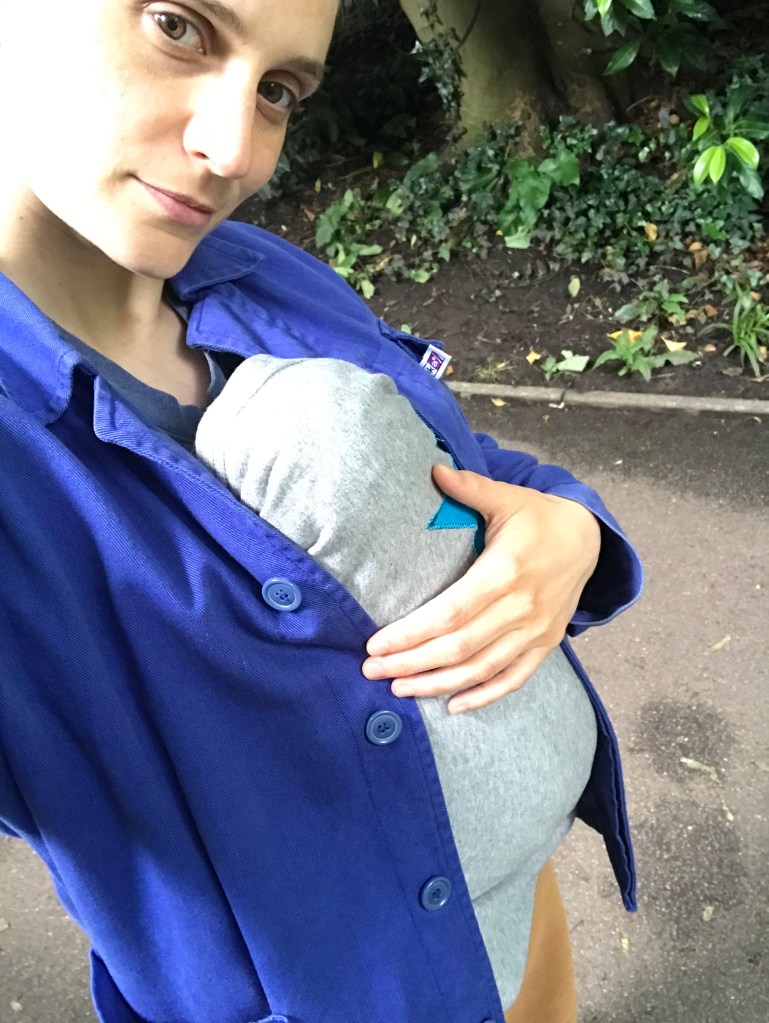
Upright positions are the key to help baby to soothe and start the falling asleep journey. “Frog hold” against the chest, with or without the sling is a good start.
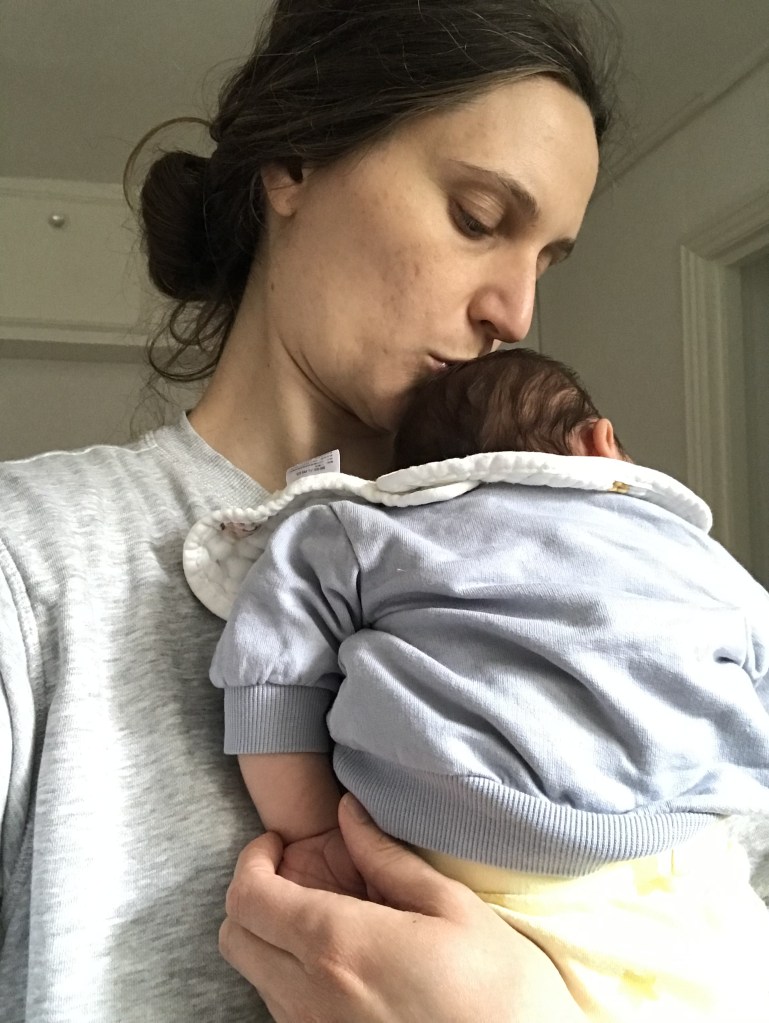
Lots of massaging on the back, “clockwork” massaging on the tummy, gentle tapping on the bottom, bicycle movement of legs really helps.
Be ready to change position! Remember, nothing lasts forever when comes to newborns life and everything can change by just changing the position and you might see them snoring while they were screaming with pain 2 seconds earlier. As the winds move inside your little one’s guts, they might need to move into a different position to help moving them along and out. So, if they are telling you that they became uncomfortable then do move them! “Airplane position” using one hand to support and massage the tummy is a good alternative.

Be ready to walk and sing! Walking creates the movements for the digestion to get going and singing distracts the baby and helps them to cope. So, space for your fantasy and make up your lullabies this will also relax you and boost your creative side. Lullabies work as mantra recitation: they abstract you from the outside and make you focus on the moment and time. They can represent an opportunity to observe your surroundings, describe, tell a story, in other words, it can be a little mindfulness experience for you too. You will find out is a lot more satisfying rather than searching for already made ones and your baby will like them a lot more, they will be unique! They will be your baby’s personal love and soothing songs.
Once baby is asleep, enjoy that amazing body contact, sit down and just enjoy it for a little bit. No rush to put baby down, learn your unique baby deep sleep signals and only when you feel they are ready, then try lying them in different positions.
Which position? The answer is, trust your instinct and your baby’s cues. For example: how did the baby fall asleep? Which side has they turn the head or rested the arm or legs and try to recreate that position as much as possible in the cot.
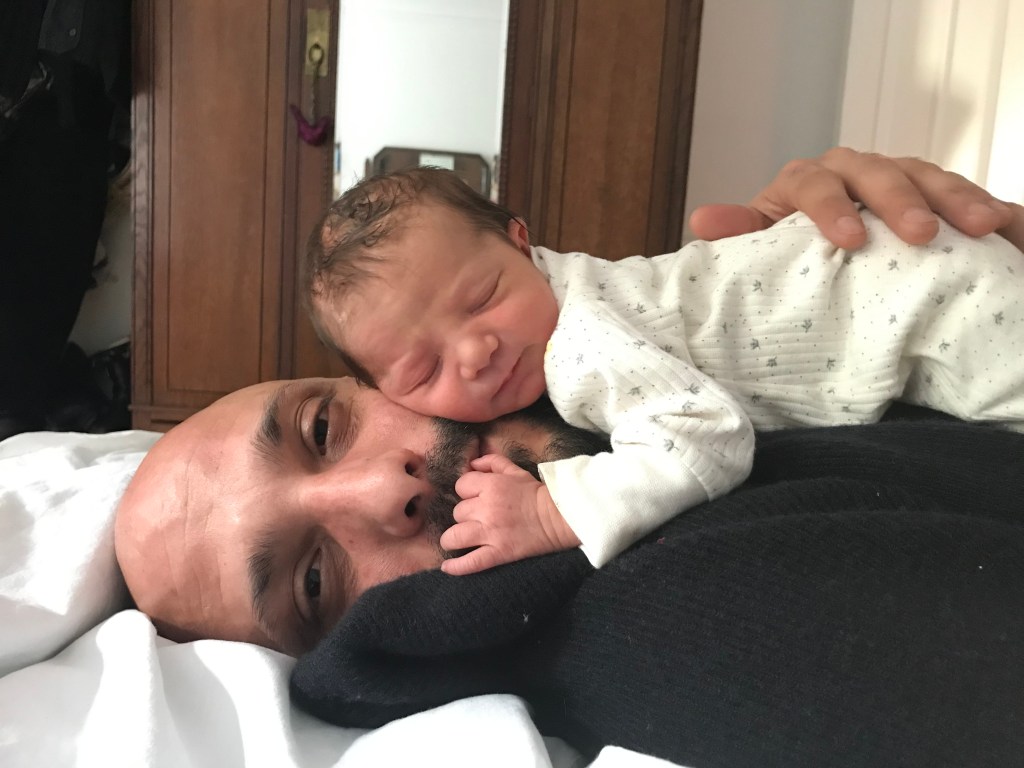
Assess your baby: is baby able to turn the head when chocking? Are they able to lift and turn the head when lying on the tummy? If so, it might actually be safe and soothing for them to sleep on the tummy for a little while, especially if you are awake.
The key is to OBSERVE!!!
Give your baby a second chance: even if they seemed to be in the deepest sleep ever, it might have been a false alarm and open their sparkling irresistible eyes as soon as their heels and back touch the matters and watch you with a questioning expression as they wanted to say – What are you exactly trying to do Mother???- That doesn’t mean that they don’t like their little cocoon at all, making you think that you will have to keep them sleeping either on you or in your bed for the rest of their life. It might just mean that they are not ready just yet, they might need another little cuddle, staying nice and tight with tummy kept warm by your body and your reassurance breath reaching their forehead to reassure them and walk them to a nice sleep soon. So, the trick is, enjoy that amazing look of their eyes, take a nice deep breath, even if you tired and desperate to lie down, pick them up again, surround them with a reassuring and soft hug within your arms and start your walk again. Continue your lullabies creative work and don’t think about time, just enjoy it and think that soon they might fall in deep sleep, this time probably a real one and you’ll be ready to get one as deep and restorative as they are.

 giulia ciarapica, midwife