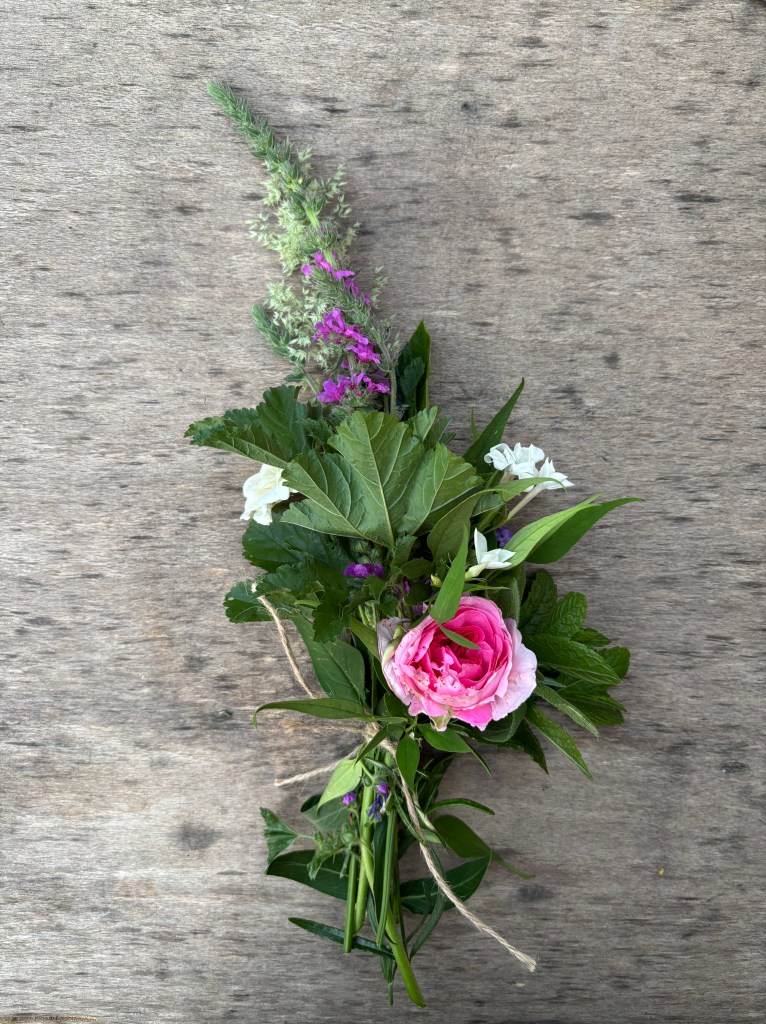
We carry in our hearts so much. Our ancestors probably were not as much aware as we are of our emotions.
But surely, they knew and practiced, unconsciously, strategies and rituals to process them.
And move on towards the next cycle.
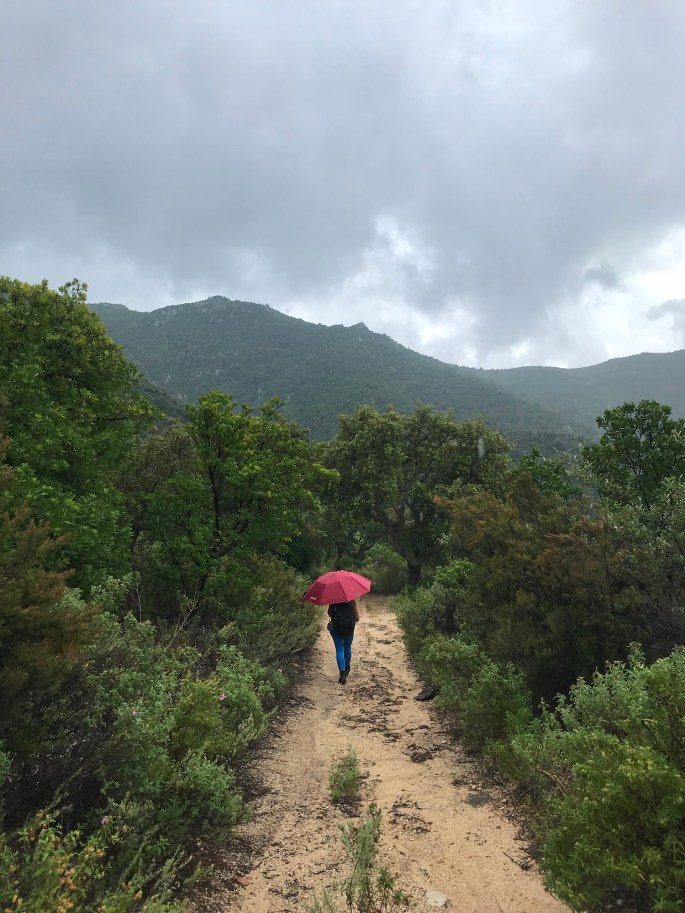
I visited the Majella national park this last June, in the Abruzzo region, Italy.
It recently became Unesco heritage, and I could understand why the moment I started driving uphill along its hairpin turns.
Spring had reached its peak, everything was blossoming.
Nature expressing its highest form of beauty.
I was so lucky to visit while Aromatica exhibition was just started open, and again so lucky to be let sneak in during a closure day. After also being allowed to stroll in the Daniela Brescia botanic gardens.
Me and my daughter had the luxury of visiting, alone, mostly bare feet this gem of natural beauty and biodiversity, on a sunny day, spots of snow still on the crest of the Monte Amaro as a background, a luminous morning sky as background.
Paths along water streams, bright green ponds, learning names, stories, smell, texture and use of local trees, herbs and flowers. Following the flight of dragonflies and slowing down, cuddled, by the crashing sound of the water falls.
Beauty can be so overwhelming.
Easy to fall into the mistake of having to catch it, with a picture, or wanting to hold on to it, as it could last. As if we could prolong it.
Something at the Aromatherapy exhibition really stayed with me and the inspiration connected me with my ancestor rituals.
This is the St John water ceremony.
At Aromatica they exposed the traditional flowers recipe used in Abruzzo to make the St John’s water:
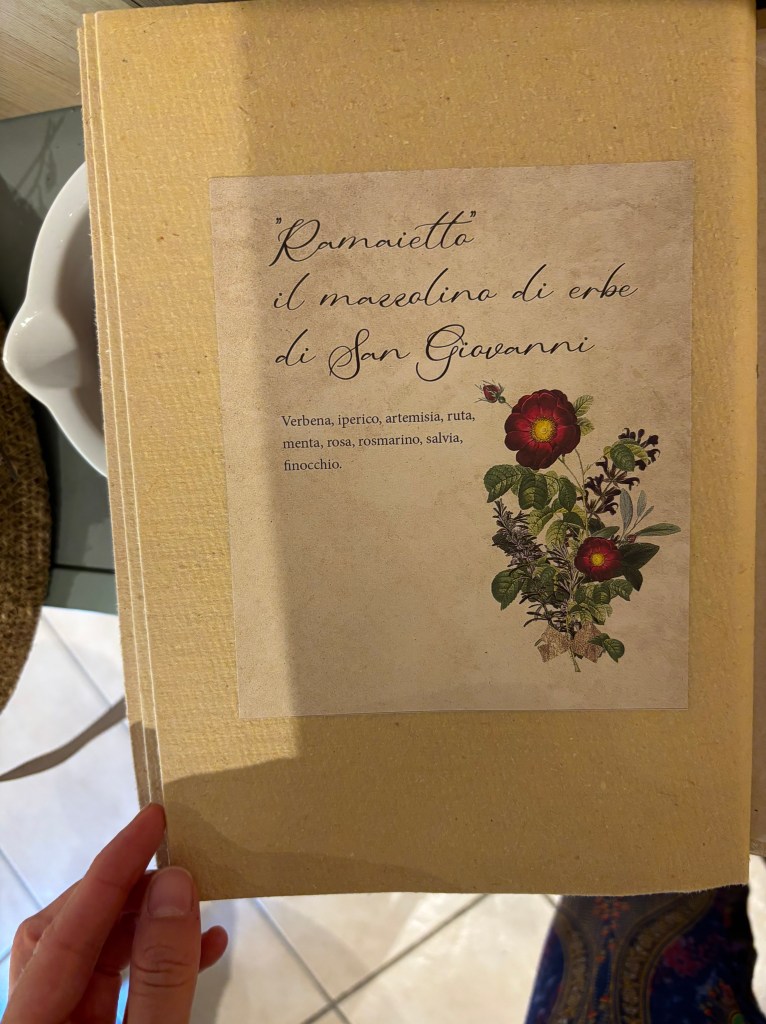
The recipe includes:
Verbena
Hypericum (St. John’s wort)
Artemisia (Mugwort)
Ruta (Ave grace)
Mint
Rose
Rosemary
Sage
Fennel
When I came back to London, I felt the call to give present life to this old knowledge that belonges to my childhood memories.
The softness of the roses petals, their comforting scent, the bunch of golden broom stems on my aunt’s arms.
I called my mum and asked: what do we put in St. Jhones water?
– Everything! Any flower you find, but has to smell nice. Obviously roses –
My mother’s advice turned up a bit generic, even though meaningful for me.
It meant to me go out and watch and follow your instinct and, let your ancestors knowledge to talk to you and to guide you towards the right petals and leaves.
So I did.
My version of St. John’s Water ritual
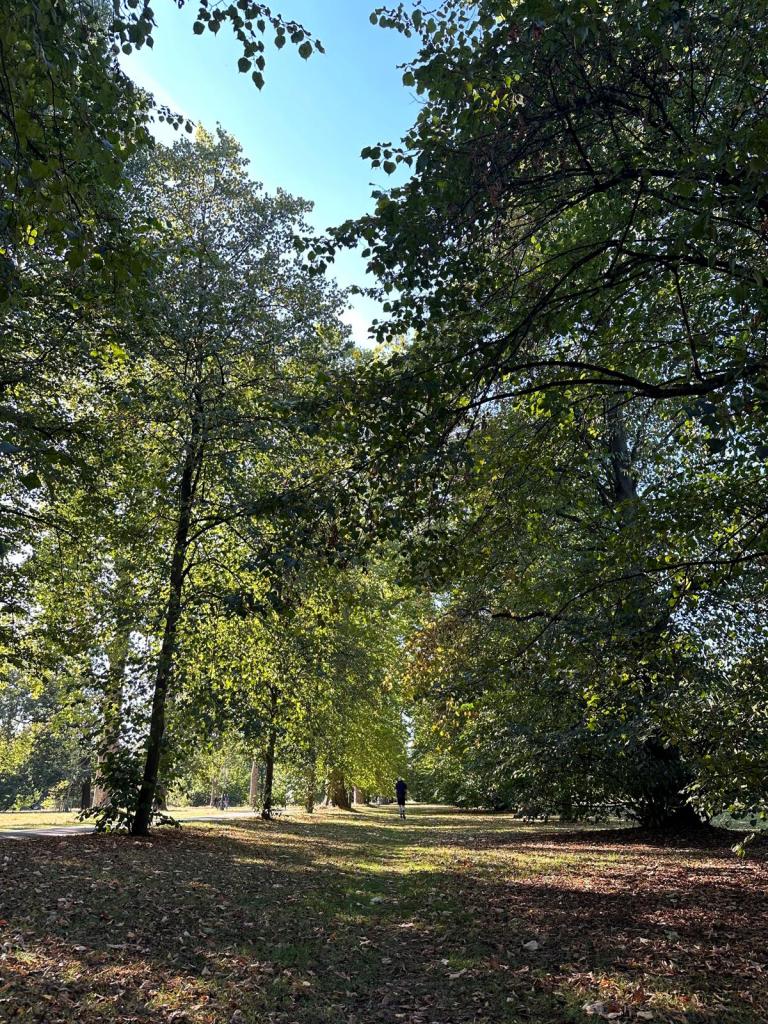
The ritual starts with walking, usually around sunset time, when the light becomes softer, and the air cooler.
Sounds and smells of fields and woods intensify exhaling the heat accumulated during the day.
Then the flowers picking.
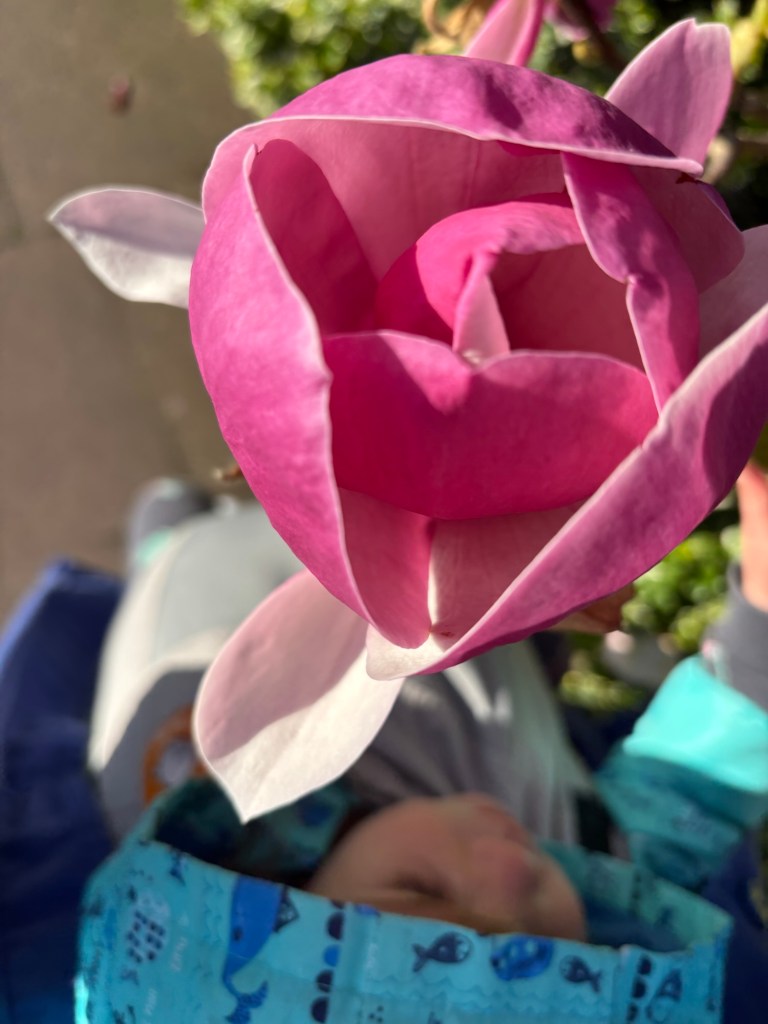
Roses and lavender were going to be on my list, very easy to find and at the peak of its bloom now.
Rose is the protagonist of this ritual.
Its essential oil property it contains the essence of the ritual itself: applying roses on own skin means cherishing it. Acknowledging its beauty, celebrating it.
It is also the oil of self-acceptance. Not as giving up.
Acceptance as embracing, staying with it.
I spotted some verbena but it didn’t smell right and I was not sure about the leaves shape, so I did not risk it.
Instead a bright purple inflorescence, tall stems, growing mainly along the pond benches catched my attention. I touched it, smelled it.
It felt right so it came into the bunch.
Mallow flowers, being careful to avoid the ones easily pissed by dogs. My daughter loved picking the large, intense purple flowers. Such a beauty.
Famous and easy available anti-inflammatory herb.
I did not find Hypericum, best know as St. John’s Worth, but only because I didn’t recognise its features, I soon found out London’s fields and parks are abundant of it.
Lavender. I felt a bit bad stealing it from a neighbour’s bush and from the bees. But I only needed a few stems.
Calming, anti-inflammatory, anti-septic. Purifying and refreshing in its deeper meaning.
The picking walk ended nearly at sunset, in my garden where I completed the bunch with herbs.
Rosemary, a balm for the mood, the muscles. Mental tone and strength
Mint, sweetness, pungent, presence, balsamic and refreshing.
Sage, anti-inflammatory, gentle, soothing.
The ritual continues with going back home, finding a nice bowl of clean fresh water and one by one, picking petals and leaves.
Smelling the scents they liberate while doing this.
Letting them fall in the water in an instinctual order.
The patterns and the scents they will create it will be an instant of joy, calm and presence.
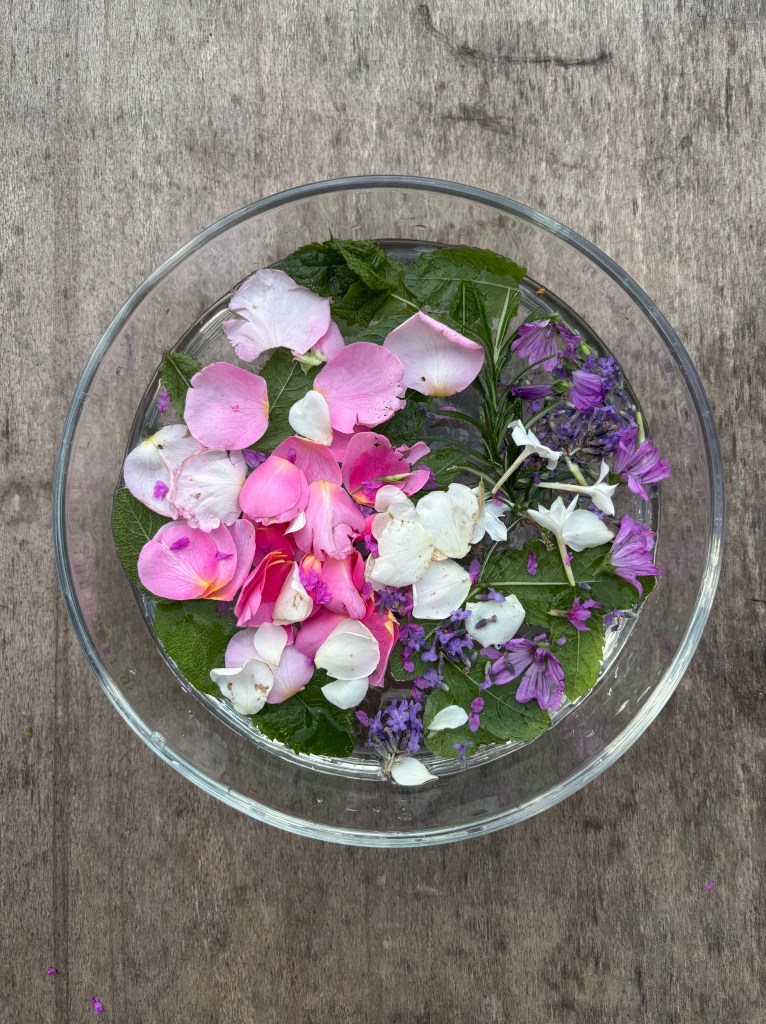
The night breeze and the moon light will do the rest. It will sit on a table outside, better if covered with a cotton cloth to keep away curious foxes and insects.
Water will infuse all the essences.
Next morning, the collection.
The infused water will be used to wash the just woken up body. With a small jug the water will be collected little by little and gently let trickle and wet the all body crown to feet.
Celebrating our body, taking time to do it.
The meaning of purification.
While we wash our body with St. John’s water, intentions might come up within us.
We might find our own deeper meaning of something we are going through in that particular stage of our life.
The images, the thoughts, the meanings we will link to it, it will be a personal and deeply healing experience. As long as we do it with grace, presence, intention.
We might see, during the process, something that was sitting deep in our heat, and pour our flower infused water on it.
Not to erase it or to clear it.
But to acknowledge it, to cherish it.
Art visual reflection
Often, when I need to connect with my inner true self and find meaning. When I need to give space to myself, I vist Tate.
I find wideness, breath within its large spaces, views and rooms.
A space where body and thoughts find decompression.
Expansion.
A space where exchange of inspiring ideas, images and people take place in every corridor, elevator, exposition wall.
Last time I went, this opera from Joydeb Roaja at the Gathering Ground exhibition grabbed my attention.
It talked to me about the gathering with our inner knowledge, to find meaning through connection with nature, its cycles, its elements and features. Its beauty.
In this picture a old woman,
“La que sabes” citing Pinkola Estes.
She is donating a flower to the young one. A flower with no roots, petals on both sides of the stem.
I found this gesture absolutely refreshing, purifying, cherishing.
The old woman has an expression that calls serene presence. She is not just rooted to the earth but she is also expanding towards the sky through branches growing prosperously from her head.
She looks at the young girl suggesting a gaze that wants to say:
I see you, you are seen, you are okay.
Here, take this flower.
This is for you.
The young woman doesn’t have a fully formed head.
Her head is a rough cast, an embrio of a fully formed head. This recalled to me to the ever evoluting and immature innerself.
It is the gathering of two pillars of our inner self:
The wise, the ancestors knowledge owner, here and everywere, grounded and uplifted, all the elements of nature connected to it, and in continue conversation with it.
The immature, the fresh and tender one, ever learning, evoluting and shaping. The one capable to feel strong emotions, often at the mercy of them.
Both sitting side by side, in a moment of gathering and coonection where a simple gesture of donating a flower holds deep meanings of acknowledgment, acceptance and cherishing.
Closing tips
St. John’s ritual is traditionally done on the 24th of June but you can do it on another date that feels right to you and fits your commitments.
Make time for this: organize an evening walk were dinner and sleeping routine can wait to make time for the flowers picking and the water preparation without feeling rushed.
Avoid using flowers that you don’t know or your are not sure of the properties and the origin. Flowers, herbs and plants can be dangerously toxic. Always check carefully the all plant features: shape and colour of leaves, stems and leaves.
Avoid picking it from road sides or polluted places. They should be clean enough to not need to be washed before soaking but it is okay to wash it if you feel they need to.
Be explorative and courious. Avoid searching for the effect of the ritual, insted enjoy the process of doing it and observe whatever happens while going through it.