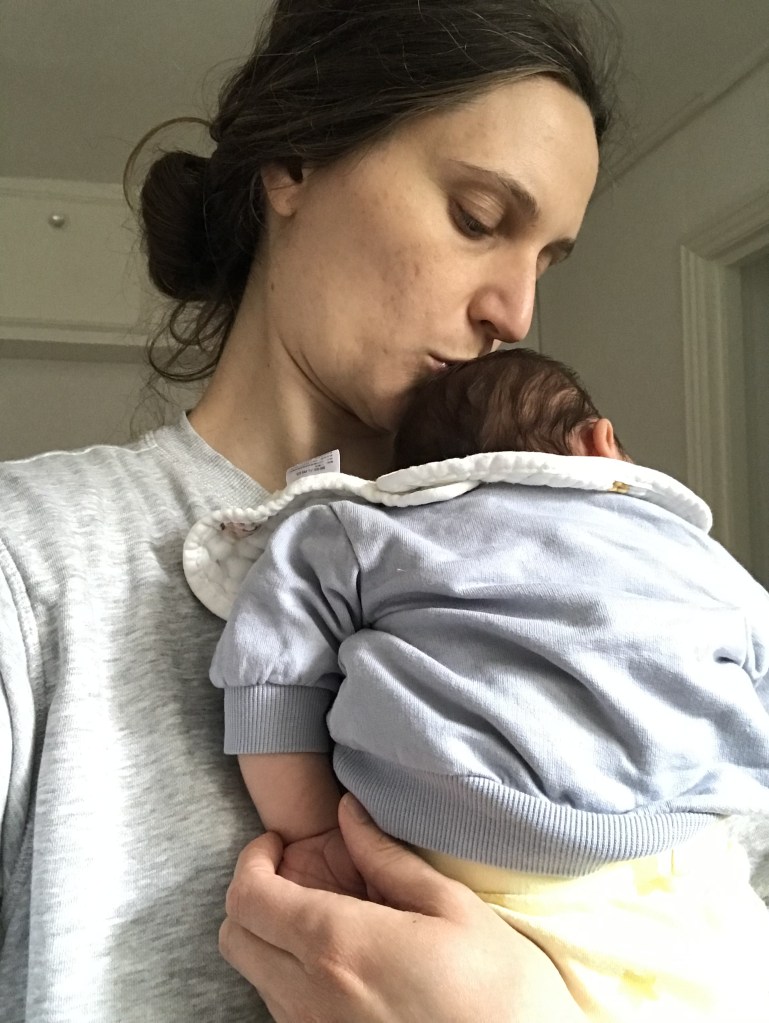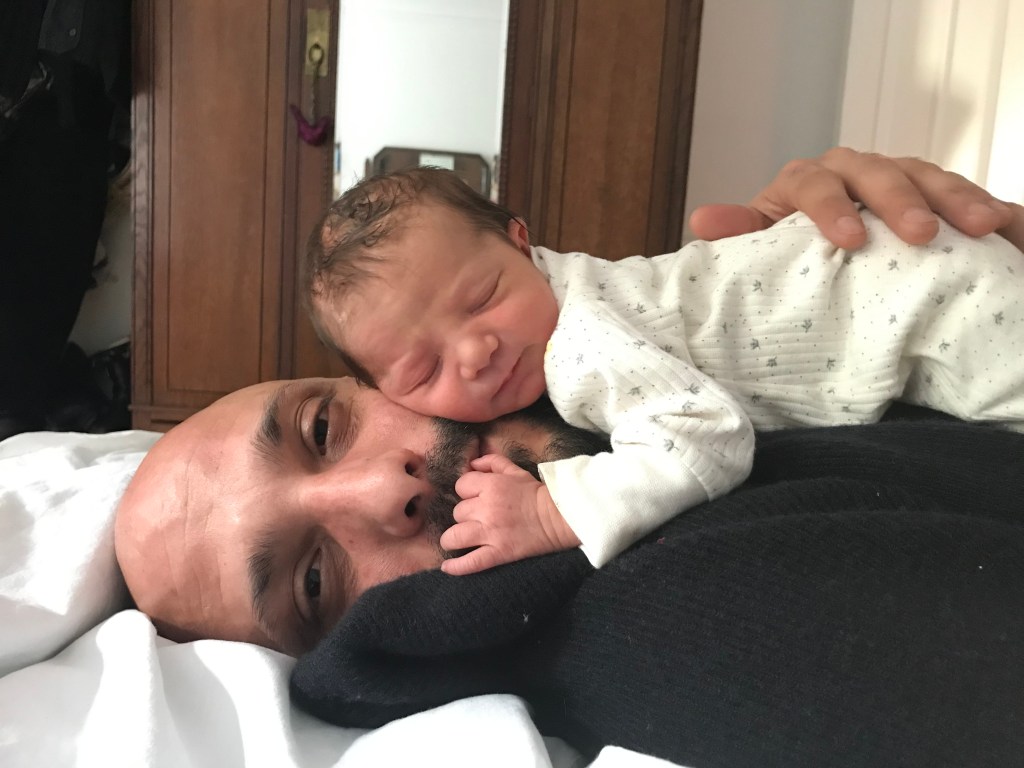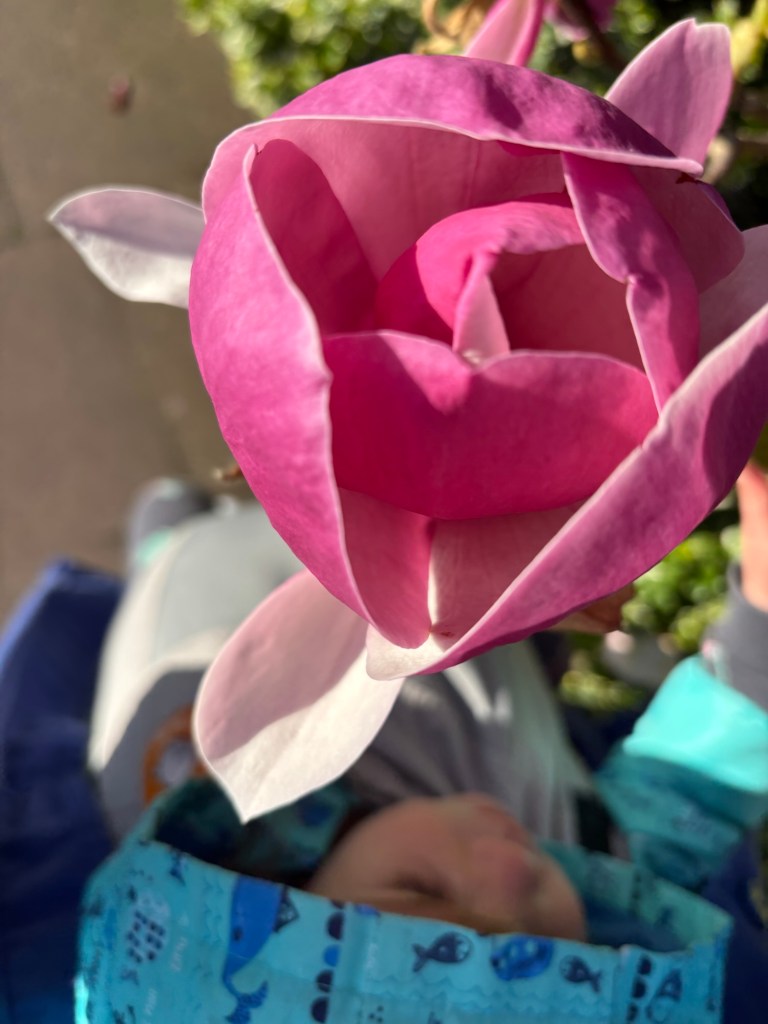
Nursery settling: my experience of managing separation anxiety.

Morning, blessed by the Sun, Spring walks.

Here we are in Spring, the season of transformation and re-birth. Things move fast in Spring. As the “wheel of life” increases in speed, we often come out from the slow cosy winter and suddenly we find projects waiting to start and changes to deal with. Just like seeds below the ground, they urge to come out and salute the sun. This spring for me came unexpectedly. Obviously I knew it was coming, but I found myself not waiting at the window for it. Probably because I knew that “painful” changes were going to happen in this period, so my subconscious was trying to believe that the time to face them would have never arrived. But instead, we got to the nursery settling week, the day on the calendar was right, no doubts and you know what? We made it! We managed to leave the cosy nest, to “re-dress” old and new social roles and bravely take off for new skies. I am going to share how I managed to deal with the separation anxiety and how it turned for us into an important step of transformation and growth, which is also mirroring within the nature around us right now.

When to start searching the right nursery?
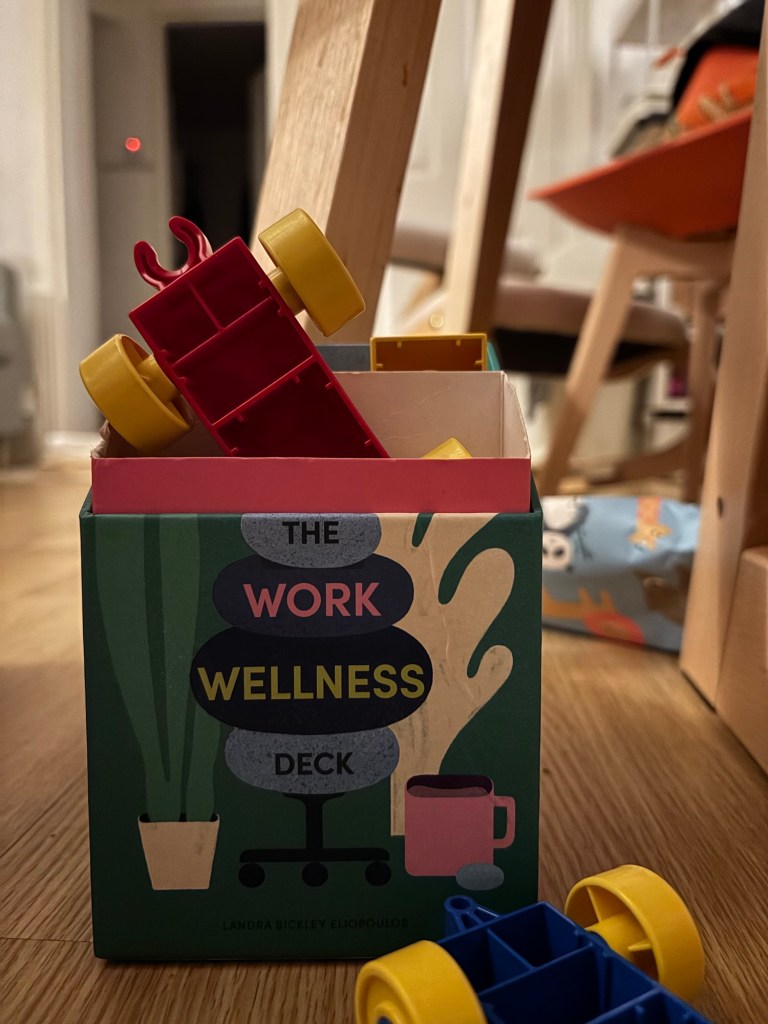
Wellbeing at work cards box turned into toy.

I started being anxious about bringing my child at nursery long before she needed to go at it. She was only 4 months when my Londoner friends started highlighting that I should have found a nursery already as “they are all overbooked” otherwise ” you would struggle” to find one. That thought of having to do that was playing in my brain as background noise during all my walks, laundry hanging, morning coffees. It was like an annoying fly that doesn’t let you sleep during a wet night camping along the lake. It is just not going away. But I kept procrastinating that action because another voice inside me (plus the actual voice of my partner) was telling me that it was not time yet. It didn’t take long before I realised that the reason for procrastinating the nursery search had a name: fear. The fear of facing separation anxiety.

What I learnt from my experience is a good news for procrastinators: there is no right time to do it! There will be a time that is right for ourselves. Some people needs to move really in advance and to plan far ahead to benefit from the sense of security given by so much time to make possible changes. Other people, like me, benefits from the last minute pressure to complete actions.

Acknowledging that everyone has different timing and that this is okay will help feeling less guilty when comparing ourselves with other better time managing parents. It is true that London’s nurseries are very busy but it is also true that there is a lot of them available. There are many and in good variety in terms of method, type of premises, outdoor space available, timing availability, family run or big chains. So, what I suggest doing is that the first step is to start listening yourself and noticing what it is important for you. You could also name it, write it if needed. You could draw your ideal nursery, using such creative tools to connect with what it really matters to you. You could sit with your partner if you have one and make a list of the things that matter to you both. You could bring that list with you when starting making visits or screening the web for a good named and good located one that sounds good enough to be worthy a viewing.

The importance of asking

Acknowledging to ourself that we need help it can be tricky for some but also a truly relieving experience. Asking means being able to unload the weight that we put on our shoulders when we try doing everything by ourselves. It can heal the wound that made us being self-sufficient, realising that we are no longer that person that “either you make it by yourself or you die”, they are other paths available, you can be helped and this is okay.

So, I started being more receptive of informations around me regarding nurseries. Similarly to when I was pregnant and looking for a pram: I was spotting and following with the sight any strolling buggy from miles away and insistently sticking to it until lost in the horizon. Wheels, colours, height, comfortable handles, texture of the cover…and, obviously, cute babies in it. I am not sure how much parents were happy about that tired looking, weird pregnant woman staring at them. But I am sure most of them had been in the same place few months earlier so they understood.

I started spotting parents with children of similar ages and started conversation with them. In other words, I took any possible park cafe, neighbours chat, swimming pool and library visit to stay connected with my pears. I started asking, being curious and as soon as I met a like minded parent I asked for their nursery experiences and kept my ears open for responses.

This is how I found out about online tools to search and contact nurseries like for example ChildcareUK. I found the website and app useful as they list nurseries’ features in charts that make easy to spot the timing you need, lunch/not lunch provided, years range, Ofstead grade achieved etc. However, I found that it is not the only way. Also the Council website was a good help as a map is provided with all the nurseries available within the borough and the contact details. I suggest to use multiple online searching tools because the website might bias the nursery search based on its own listing features.

Asking can be an act of true connection and sharing when we do it with intention to actively listen the other person’s experience. It can bring inspiration, knowledge and a sense of “being in the same boat” that often relieves anxiety feelings. When we actively listen to other people’s experience we get an opportunity to listen to ourselves too: we can notice what it feels right for us and what it doesn’t and all this process of self scanning can take us to our choice. I also believe that it is an healthy exercise to remember to keep a distance from other’s stories and acknowledge that those stories are unique to them. We should avoid the risk of mirroring into other’s stories and absorbing fears, as well as too negative or positive experiences. How to do it involves acknowledging what belongs to them and what belongs to us and how this can be meaningful for us both when we pay value and respect for the experience that the other is sharing with us.

How psychotherapy can help the process

How often we listen friends and relative saying: ” I was crying more than my child when time came to leave her/him with the teachers and go”. Why it is so tough to manage those first separations? Why can it generate so much anxiety, worry or even stress? Even if we are happy with our decision and we trust the teachers, we liked their way of interacting with children, even if we sensed vibrations of kindness and serenity in the classes, we observed children being respected and valued, it is still extremely difficult to leave.

What I learnt, it is that the child that was panicking at the thought of that separation it wasn’t my child, it was actually me. The experience of “abandonment” of my child was resonating with my own personal experience, and probably with other experience related to abandonment. So I understood that it was my duty to acknowledge, embrace and give sense to that abandonment experience before I could be able to support my child. Psychotherapy led this process that created the conditions for being an emotional anchor for my child. This allowed me to be present and centred for her and with her, rather than lost into my own fears.

Positive mindset is key

My child’s back pack

I found helpful to set intentions. That is when yoga and mindfulness exercise can be a good help. Once we learnt what sits at the roots of our anxiety than it is time to truly embrace it, make room for it with empathy, love and acceptance. This can allow us to deal with our emotions so we become ready to be present and focused for our child. A good idea it is to include a set of intentions at the beginning or at the end of our yoga practice.

Allowing a space for stillness during the day it is a remarkably caring and wellbeing generating choice that we can make for ourselves. It is important to create the condition for us to feel relaxed, safe and undisturbed for a time of our choice. It can help to set a timer so we are reassured that that is the time we decided to allocate to meditation and we don’t risk our mind running away with fear of getting late to the next task. As we sit or lye down in a comfortable position, we bring our mind’s attention to breathing. Aligning our thoughts with the breathing movement will bring a feeling of decompression, the bless of a pause or a slow down from our inner chatting. Our thoughts will still run, the point is, allowing this without opposing, letting go the resistance and gently, kindly, bringing our mind back to breathing.

At the end of our breathing exercise we could allow some time to set our intention for the day. An example can be:

  • Take three deep breaths through your nose and exhale through your mouth, this will release tension
  • Add a few seconds of holding breath at the end every inhale, this will help you rooting your mind and feeling centred
  • Gently repeat to your-self “I will be emotionally present for my child and I will trust his/her own inner resources to make it without me”.

Nurturing feelings of trust

Once we are sure to have the elements required to trust the nursery we choose than it is a good help to establish trustful connections with people that work in it. I engaged with Claudia’s link teacher from the very beginnig, trying to establish a genuine connection with her. How did I do that? I have been honest. Honest with my feelings of the moment and the way I expressed them. I shared my fears as mother about to leave the child to someone for the first time. I asked about how nursery worked, and I made all the questions I felt I should. – I am still breastfeeding Claudia, do you think I should bring expressed milk?- or, – Do you do mostly teachers led activities or do you leave children playing independently?-, – How long have you worked in this nursery? Do you like the working environment?-. The teacher kindly complied with all my questions and responded with kindness and participation. Not just that, she taught me to acknowledge that I was leaving my child to a person that was a stranger until that moment and to recognise how this could make her feel lost and abandoned initially. She explained the process of settling, and how the child should become capable to gradually build trust within the adults that will look after him/her. This made such a huge difference.

So I learnt that if we nurture a feeling of trust towards the nursery staff, especially the teacher that will be linked to our child, we can make this process easier for them. It helped me to acknowledge with empathy that teachers are human too and that it is challenging for them too to manage settling. It can help to get into know them closer, to nurture a feeling of familiarity and to feel them less as strangers. Often nursery have pages on websites or a boards where teachers describe themselves: their professional background, their interests and hobbies. I found reading those made me feel closer to them as humans, that I was leaving my child to people I knew a bit more. It is helpful to nurture thoughts were we believe that such people can bring a positive input to our child lives. We can nurture trust in the fact that they will practice their profession in order to make them feel safe and loved while we are away. Teachers will perceive this and also our child will. This might create a positive cycle of trust. A safe net where our fears can be still listened but also dealt with, in a positive and mindful way.

Praising good achievements

If we made the right choice and followed the right steps, our personal right steps, things will start improving. We might observe our fears and worries will gradually settle and that leaving the child at nursery might actually become a positive experience. Our child tears will reduce, time by time and his/her ability to self-soothe and to trust the new adults in their life will improve. They will start making friends, socialising, playing, learning new skills and engaging in new activities that will enrich their range of thriving opportunities. I observed soon Claudia starting to sit at the table for eating more eagerly, or playing with a wider range of tools, objects, toys or even exploring new ways of playing. I noticed her motor skills improved at a faster pace. The learning of the routine was also hugely beneficial and engaging with such routines helped acquiring more structure at home as well. I found it is great to ackowledge such important goals, not just to observe them within ourselves but also to talk about them with partner, family, friends and, most importantly with Claudia. It is amazing how she can already understand that I congratulate with her, how she can understand the intention and the deep meaning of what I say, more than the single words.
Do I have enough milk? – Challenges of planning and starting breastfeeding and how to embrace it.

This is a topic I have been wanting to talk about for a while but never had the gut to sit and do it. I kept procrastinating and using the little space preciously reserved for writing for something else. Probably it has been an attempt to walk far from what it has been for me such a soft spot. A delicate topic for both my personal and professional experience. You don’t go and touch what hurts, do you? But if you do it with compassion and care, that is a touch that may heal.

I took this fast-proceeding Christmas time to finally do it, as my gift to myself and my daughter, as a celebration of the gift and privilege that I felt when I “received” the milk to be able to feed my daughter.  

My milk story 

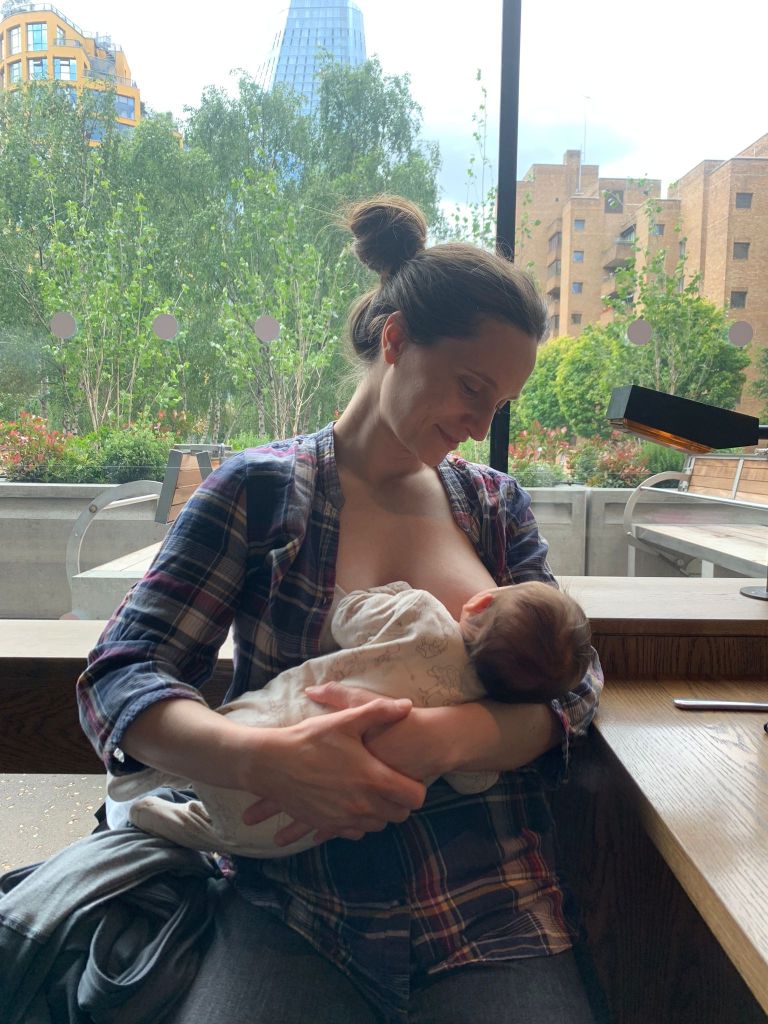
Me and my one month old daughter breastfeeding at Tate Modern, London.

My milk story starts from a fear, a fear that originated long before I became pregnant with Claudia. Not sure exactly how and when it generated within myself the conviction that I wouldn’t have had milk, it could be a good session with my therapist to dig into. But somehow it did. When you are a child and you are told you have small breasts, you just believe it. Others’ spoken loudly (and not always polite) believes, comments and opinions are not kept a secret in small Italian village. And, when you are a child, other’s opinions easily become a truthful mirror to confront with, you just believe what you are told. You don’t have the maturity to take distance from other’s opinion, you may not have had a therapist or a very mindful parent to enlighten you about the fact that other’s opinions belong to them and find roots within their experience. Most times these speak more about them than about you. 

Anyhow, it happened that every time I would watch a relative, a friend or a patient breastfeeding it felt for me like a privilege, like a party I would have never been allowed to take part. I had this image of the grace of a serene face baby receiving the milk directly from his mother’s breast. The peaceful connection, the eye contact. The gesture of emotional and physical nourishment that a mother makes when offering the breast to her child. I would look with admiration while nurturing the fear that it would have never been that easy for me. 

Then time arrived for me when I became a mother myself, and the fear that looked so far away became a much closer threat. However, the physiologically induced effects of progesterone and prolactin came on my side: my breasts grew from the very beginning of the first trimester. I could observe, and welcome, my body gently expanding. A miracle. I was slower, heavier, sleepy all the time. It is like water element was prevailing within my body and permeating most my tissues. Yes, I knew breast tissue was growing. My breasts started becoming a different organ to the one they used to be, they were preparing for a different function. 

On a certain day, the miracle became real. I was around 22 weeks pregnant and I was having one of those relaxing hot showers after an intense day at work. Without thinking too much about what I was doing I had the instinct to express my nipple a little bit. I had no expectation or too conscious sense of what I was doing, it was more an instinctual gesture. I saw a little golden drop coming out slowly, without even pressing too much. An emotion grew within my heart, behind my sternum. I felt a surge of joy pervading my body and tears came out of my eyes, mixing with the hot water of the shower. – I can feed my baby – I told to myself. 

Few weeks after, Claudia was born, in the middle of the night, well before dawn, in the darkness of my bedroom, in the calm of my house. It finally came the time when I could experience her warm silky skin sliding against mine while crawling in search of my nipple. She looked like a little bird chick: eyes closed, open mouth, waving the head right to left, left to right, searching. Miracle, we didn’t even cut the cord yet but she knew exactly what she was doing. She was all instinct flowing; she didn’t need to know anything. The paramedics where still there as we were waiting for the placenta to come out. The gentle hands of my midwife helping me to latch her, as I asked for her to do it. And finally, the latch. That strong feeling of tightness. – you are so strong – I told her; I kept saying this to her since the labour started. That was the feeling she gave me, from the very first “real” labour contraction, I could feel her strength, her determination. 

I could finally practice on myself the latching techniques I used to teach to other women for all my midwifery life. Reason why it was not difficult to latch her from the very beginning. I knew how to hold her, how to positioner to help her to latch, how to foster her natural movements, just to make it easier, and to avoid her to chew my nipple as little as possible, but to latch deeply down on to the areola. 

What I couldn’t prevent or forecast was all the pain it came soon after. All the delicate parts of my body were hurting for several days. And it would hurt every time she would latch. And it would hurt a lot. I remember it being a lot even though a don’t remember the exact feeling. My species conservation hormonal mechanisms have already made me forget this. I remember one of my colleagues, also a breastfeeding mother of a 2-year-old and expert community midwife, coming home for my postnatal check and describing that feeling as being punched with a broken wooden stick. It was exactly that feeling. I regretted for having told to all my patients the midwifery book and guidelines’ story that the correct latch shouldn’t hurt. It is not like that for all women. As for most of the rest of the advice we give.

She also gave me another big tip that felt so true and mirrored so well what I was experiencing: – it is like your nipple skin is changing, it is scratching and nearly peeling off now but at the same time, it is regenerating to become something else. You will end up having no sensitivity when she latches-. It made so much sense. The evolution of my body, its metamorphosis that started the moment Claudia was conceived and implanted within my womb, was continuing. So, with the milk let down on day 3, my breast, as my colleague anticipated, reached soon the size of a summer melon, same consistency as well, to the point that I could not believe Claudia was able to latch to such a hard and tense surface, but she did. And the feeling of her emptying it, draining it, nearly completely, was the most relieving one, to the point that it compensated the needle scratch of the bite on my nipples. 

It was times of runs home from the laundrette where me and my partner were trying to clean the blood spots of my bed covers left from the labour to my house as my breasts were exploding and dripping everywhere while Claudia was doing the longest nap ever, probably helped by the white noise of the washing machines and the traffic. Times during which I was always wet, pads everywhere. Pads continuously to be changed, in my breasts, in my nickers. Never spent so much time between toilet, bed, sofa in all my life. But eventually the next evolutionary step miraculously happened. I choose to commit to breastfeeding on demand and managed to avoid any expressing of any sort, despite having to deal with a very strong flow that made Claudia choke and cry quite often, especially when she wanted to suckle for comfort and not for hunger. Thanks to that commitment, Claudia gradually managed to self-regulate the quantity of milk she needed so I could say forever goodbye to the breast pads in about within about 40-45 days. 

At the same time, I could pleasantly say goodbye to the nickers pads to. So, the summer ahead became much dryer, warmer. The element water rebalanced within my body and stopped being so prevalent. I could enjoy happily feeding my little one lying on fields, grass, river shores, beaches, benches, with my back rested on trees, back of the buggy, back of my partner. I mastered any imaginable reclined position with any possible position of the legs to save my back while allowing Claudia, and myself to feed comfortably. And I would never thank enough to the person that donated the breastfeeding pillow to that charity shop which sold it back to me for the most worthed £ 7,00 paid in my life. 

Breastfeeding in the Sun at Beckenham Place Park, London.

Now Claudia has past 7 months and I am watching the clock for her not needing me to feed her anymore and only relying on food. It is a pain and, as much as waking up 2,3 or sometimes even 4 times at night is hard, it will be much harder to lose that cuddle moment of a feed on the couch, light deemed, on a rainy and messy afternoon. Breastfeeding has been also this, a pause to the frantic days, to the moments where you don’t know what other play to invent, when your fantasy is gone off together with your sleep deprived brain. When you finished up all the good cards and you have no joker to play to make her happy and entertained. You sit, make a warm drink, if you manage, leave the phone as far as you cannot see it lightening up. You aren’t there for no one apart from her.

Antenatal preparation counts

One of the most common questions I received during my pregnancy with Claudia it has been: does it help being a midwife? Does it make it easier? The answer to this it is very complex to me and I had to shorten it and adjust it depending on the context and the person I was asked. But the point I want to make here is that knowledge really helps. As midwives we know physiology. Physiology means the process that happens in our bodies to make it function in a certain way. Knowing childbirth physiology, I believe it is why being a midwife it helps being a mother. On the other side, being a midwife means knowing the pathology, meaning all the possible things that may not go well. This generates fears and anxiety that such situations may materialize in our experience. But when we don’t let the fear to take over, and instead, we use the fear to guide us in picking up the cues that something could go wrong and make a change, that is when our pathology knowledge plays on our side. 

I believe that antenatal preparation must give this: an accessible knowledge of our mothering bodies, the mechanisms that make the lactation happens. This is why I would suggest picking up an antenatal class were they focus on developing self-awareness and trust in our bodies and mothering skills, which is essential for a healthy breastfeeding to establish. 

On the other side, I would avoid taking part in classes where it is reiterated how difficult breastfeeding will be, how challenging, how sleep deprived they will be, how bad sore nipple can be. 

Learning practical skills is also essential. As mentioned, knowing how holding and positioning baby to breast allowed me to make a smooth start. I think a good antenatal class should also aim to offer knowledge about how newborn physiology works, what can we do to help them digesting and sleeping well, how to sooth them, how to approach the crying baby. To me for example, being able to acknowledge a “physiological” cry due to blocked winds and being able to respond and soothe my baby effectively saved us from several unneeded hospital journeys. 

Holistic approach

I suggest that the choice of feeding our child it should be an act of real freedom. This to me means freeing ourselves from images and adjectives we acquired during all our life about how breastfeeding should or shouldn’t be. These are going to limit or affect our experience which is individual and personal. 

From the psychological point of view, how we feel about feeding our child finds roots within many aspects of our subconscious and is important we find a space where we can give room to these feelings, to talk about them, to process them without judgement. 

Physically, we need to create the conditions for the process to start and develop. This means taking care of all aspects that make our bodies healthy: nutrition, self-massage, breathing, relaxation, mindfulness exercises. All these activities help keeping stress levels at minimum and foster the correct hormonal release levels, essential to start lactation. 

Relationships are so important. It is important we connect to family members, friends, aunties, mothers, blood or life mothers, health professionals. We need to create a healthy community around us that can offer a support that is concrete, free of interests and judgement. And to be able to choose and nurture such relationships in a healthy way we need to nurture trust within ourselves. We need to nurture compassion for ourselves, curiosity of observing how our bodies are capable to change, to blossom, to become something we couldn’t believe they could. We need to learn giving ourselves trust, hope and love. 

Connect to heal. When connection, sharing and creation of communities can foster healing.

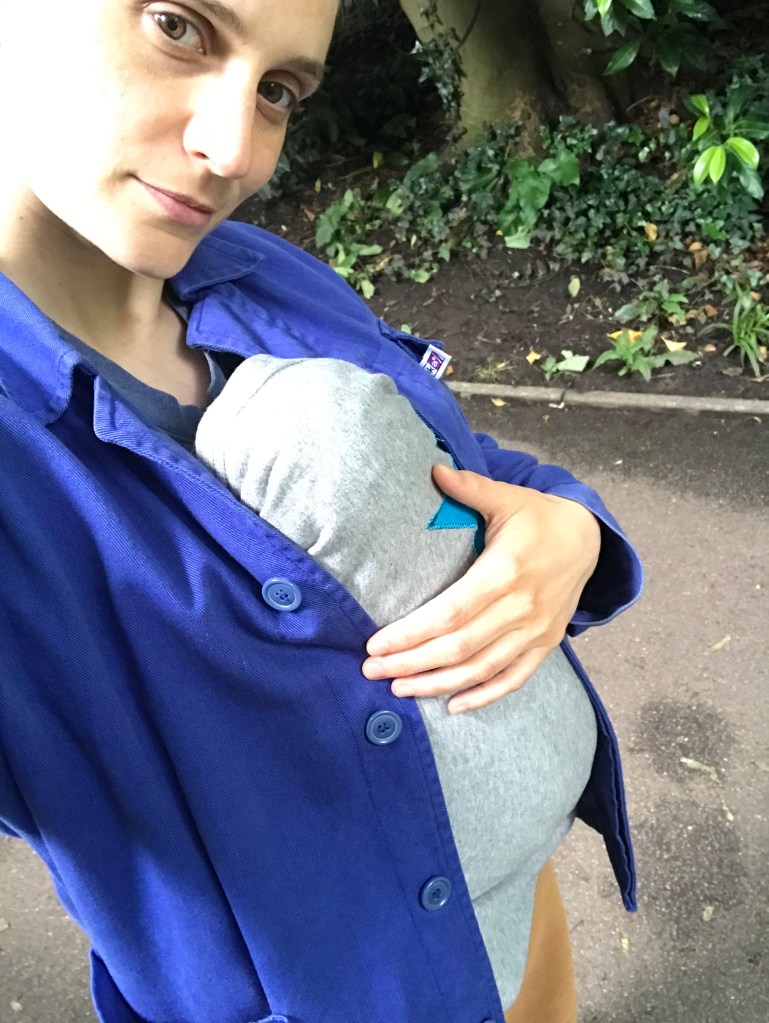
It is time to wrap up this end of September and dig into my soon coming Autumn holiday. I am thinking this while a walk slowly towards the Sun, my steps are cushioned by the wet shiny grass of the recreation ground field. The ground is soaked in water, I can smell it and feel its coldness under my soles. I let the sunset sunshine to penetrate my skin, warming my face, my expression becoming serene. Claudia is now snoring inside her sling. I feel grateful. 

As I walk, the tips of the strings come together and all I learnt during this transitional month of September is coming to one piece.

Practicing sharing as form of connection

One of my evening treats is to lie on the couch, legs on the chair, pillows to support my back, elbows, knees… all the bends of my body resting on pillows. A warm cup of something, usually barley tea, steaming on the arm of the couch. Lights dimmed, leaving the small living/kitchen room peacefully silent, hugged in a warm soft light which calls the time to rest the body, to quiet the mind. Going through the pages of my favourite journal Breathe, I bumped into an article which perfectly matched the main theme of my reflections during this transition to the new season. The article was talking about the importance of finding the courage to share own creative pieces of art, particularly referring to writing and mentioning stories of “regular” people (intended as non-professional writers) which have been silently and secretly nurturing their talent without sharing it with anyone until their boxes of manuscripts were found by someone, put together in one book to eventually became a world class best seller. What I found very meaningful about this article, it is how it highlights the importance and the benefits of sharing to establish a form of connection and not to obtain an audience. Emotions that we put into words, paintings, verses, sculptures and so on, resonate in people that access our piece of art. People may recognize something that talks about themselves in what we have shared, and this creates a sense of connection, a feeling part of something that makes us similar. This feeling of belonging to something in common can be inspiring for others, which might take example from our experience. The article was also mentioning how the resistance to share own art can be linked to a block of our third chakra: Manipura. The third chakra is located just below our ribs, in coincidence of our stomach, just below our sternum bone. It is the chakra of productivity; it is connected with the element fire and, when active it makes us capable to activate our creative process. When Manipura chakra is blocked, we find difficult to activate our creative power. We can visualize our chakra as a wheel that has to run steadily as a mill. Imagine our energy to be the water that flows into the blades making the wheel running. As the wheel spins it makes the mill working and so the flour coming out from the grain. Similarly, when Manipur chakra is healthily active, it creates a leading outward energy that allows the transformation of our ideas into action. This way we become capable to allow our creative power to concretize and to release it into the world. When Manipura chakra is blocked, we might feel resistance to share. We put our breaks on, scared of other’s judgement and suspicious about people’s opinion or advice about our creative work. When Manipura is flowing, we feel trustful about our creative power and not scared to share it with others, instead we perceive the connection generated by doing so. 

We can work on solar plexus blocks by stimulating this area with yoga asanas that make the solar plexus strong and flexible. The sun salutation it is a dynamic sequence which as a warming and energizing effect. It involves alternation of bends forward and backward of the upper back which are stimulating and strengthening. The repetition of three sun salutation can be a good idea to be included in our morning routine for its activating and awakening effects. 

A wood is a community: connection between roots

I like listening to radio. What I like about it is the “here and now” nature of the radio programmes. Despite it is now possible to re-listen podcasts of a missed favourite programme at any time of the day, I find that it lessens the beauty of listening to a comment or a news that belongs to that time and date. It is a “moment in time”, citing my beloved friend and colleagues when she wanted to encourage me about labour preparation. This peace of interview that was made by Linus at Radio Deejay resonated perfectly with a blissful moment that I shared with my dad, when he came to visit us last month. We were walking at Hide Park after our visit to the monumental Natural History Museum. Claudia was asleep with her dad and my mum was way too tired and way too full of jamon serrano and ice-cream to walk, so we treated ourselves with a dad and daughter walk through the park. At some point, as we wanted to reach the Serpentine Lake as quick as possible, to avoid staying away for too long in case Claudia would have needed a feed, we cut the pathway so we left from the road and cut through the trees. As we walked on the soft high grass, stepping on the first crackly leaves that talked about an already started Autumn, I could sense the life that was going underneath. I said to my father: – can you believe? All these giant trees are connected underneath, they all touch each other through the roots. They form like a web through which they communicate between each other-. And I continued my spoken loud thoughts: – What you can see over the ground it is completely different from what is happening under the ground: they look far, they look like they can’t touch, but they do, in a way that our eyes can’t see but our hearts can sense-. 

Autumn walks are something delightful, especially when made with open eyes, shut phones and open hearts. Hearts become capable to reach and touch each other as the roots of the trees, and that’s how they heal. 

During the interview above mentioned, the botanist Stefano Mancuso was describing how trees that we see standing apart when we walk through a wood are actually closely connected through their roots and form a community where they are strictly interrelated. Trees exchange nutrients and information through their roots and create a community that keeps the wood an alive and evolving organism. I found inspiring and good food for reflection the answer that Mancuso gave to the question: what can we learn from trees? The answer was as such: – Plants are beings that create communities, always-. He sustains the theory that plants have learnt, a lot earlier than humans, a way of living and thriving as part of communities where everyone shares what has to share according to its own possibilities. It is fascinating to observe how plants can sustain another plant that is sick or dying. Trees are capable to keep alive a tree that has been cut which will continue to receive nutrients and stay alive, until the wood organism will require it to do so. In this sense, plants know. They have an intelligence that allows them to share following the rules of life. They are not stopped by fear of judgement. 

Hide Park, London.

My experience of setting up an art group to heal the fear of giving birth   

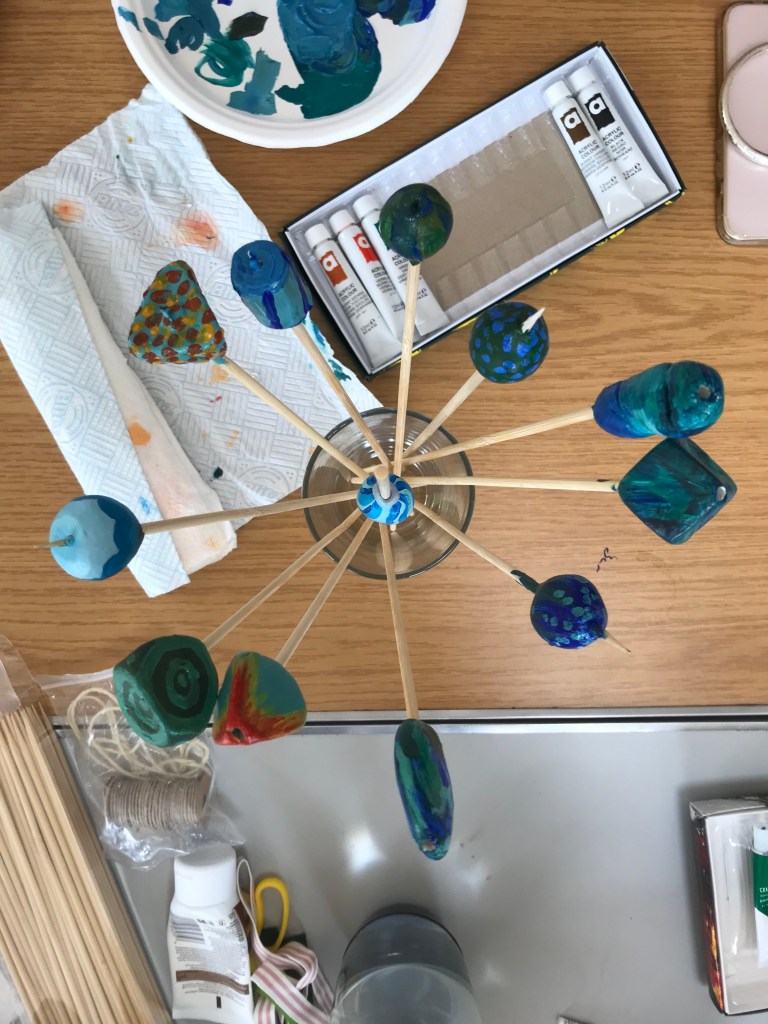
When the time came time for me to prepare for my birth, I was looking for a way to celebrate the soon ending pregnancy and the soon coming motherhood. I wanted to celebrate this “liminal” phase, I needed to process the passage from my social role of midwife, friend, woman, daughter, into the new role of mother of my child. I started searching how I could do it in a way that made sense for me, which means that the classic balloons, ribbons and cakes baby shower wasn’t for me. I needed a rite of passage to share with my friends and colleagues the hugeness of what was happening. I needed to express the creative power that I was feeling inside me. At the same time, I needed support and empathy to be able to give voice to my fears around giving birth. I wanted to listen to others experiences to be inspired and reassured. I needed to celebrate my birth on all levels: emotional, physical, spiritual, social. So, I researched until I found something that felt right: I would have involved my crew of women in the crafting of a necklace where every one of us would create a bead. I equipped myself with self-drying clay, colours and brushes then I took time and space to sit myself under the first warm suns of April and started to make beads of different shapes. I let the hands working alongside the flow of my thoughts, avoiding overthinking which shape I was making. Twelve beads came out, I put them to dry on a piece of paper and meanwhile, I found a nice place to hire and gathered my life and pregnancy buddies, the ones that I knew would have come with open hearts and positive mindset. The result was unexpected and incredible. I opened the rite of passage with a physical warm up, we walked through the room, we stretched, we took hands, smelled a woody incense, listened to music, gathered in a circle and connected with the elements. We put some tables together and sat around it.

The beads just painted.

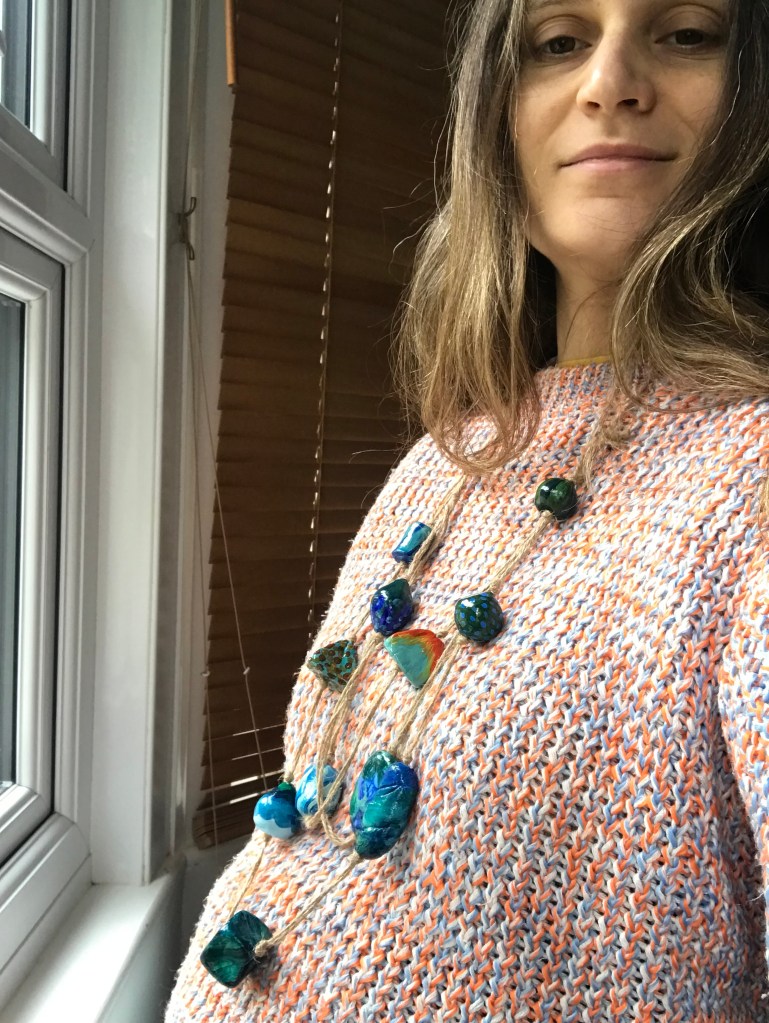
As we were painting our buds, each one of us in turn shared a birth story, or any story that would have involved giving birth or being birthed. They were laughs, tears, gazes of empathy. There was deep sharing of experiences and thoughts. At the end we shared food, and ended the gathering with pictures and greetings and good luck wishes. I went home with a beautiful set of buds that my friends painted for me and with me. I felt extremely grateful of this gift, I felt privileged of getting to keep some of their art with me, symbol of the experience they shared, as they translated it in a shape, colours and matter. I put them together in a necklace and wore it, and as I did, I felt a warrior, I felt strong and protected. I stored the stories shared as treasures in my memory and those words, gazes and smiles all came in help during my labour and they translated in encouragement. I knew I wasn’t alone, I was part of that circle, I was one of those women, my community, so I could do it. 

Me at 39 weeks of pregnancy wearing our hand crafted necklace.

Holidays related stress: how to acknowledge and manage it through self-care practice.

It’s September. It is well started now. Schools are back on. The wheel of work and life plans has restarted running. Lists of “things to do within September” are written on the fridge door. The old magnet chalk board is still doing its job. The rains are also back on. Not that they ever really stopped during this British summertime. However, they changed from the heavy storms, quickly blown away by vigorous ocean winds and followed by warming bright sun. Now, they are shifting to the thin drops, everlasting typical London rains which make you wonder whether there is still a sun behind the clouds.

During these rainy, wet, oh God WET, every day darker, but still warm evenings, we start regathering with our friends now back from holidays. We get cozy and in between one bite of pizza and the other, we share stories about French countryside adventures. We talk about camping storms misadventures, rainy beach days spent waiting for the rain to pass. We recount amusement park losses due to wee emergency and the expensive musical show lost forever.

It’s well known that stress and anxiety are some of the most frequent health conditions affecting people nowadays. Parents are also affected by these issues. The root of stress is often not within the holiday itself or the lack of capability to organize them in a way that they can be enjoyable and everything can flow smoothly. I don’t think there is a recipe for that, however, you might find lot of literature about how to plan the perfect holiday with children.

Holidays can represent many things for our life journey. Sometimes they can be an opportunity to confront our soft spots and vulnerabilities. There is so much time for thinking during holidays. Many people don’t want to think because this would open the Pandora vase and make it worse. That’s why many people choose to head to super busy holiday villages. These have lots of activities for children to keep them busy. Parents pray for an undisturbed lie under the sun at the sound of the ocean waves, fiction book in one hand, cold drink in the other. 

My point is that if holidays have been a stressful moment and going back to work felt a release, then is a good idea to allow yourself a slowdown this September. Leave only the essential plans on the chalkboard list. Leave only the ones that you think increase your positive productivity and remove the ones that can wait. Consider how much stress is affecting your life and consider talking about it to a therapist. An initial consultation might make you aware of how you are feeling and whether you may benefit from therapy or not. Don’t let yourself run until the next Christmas holiday because this might keep feeding you stress ball while you run through your busy life.  

Stress is about control.

When was the last time you felt the release from losing the control? For me, probably when I gave birth. Talking about holidays, I am one of those people that finds very difficult losing control. I struggle to let people decide for me. I find it hard to let someone lead me to a place or find the right restaurant or a cozy B&B without me supervising. Better yet, I prefer being the one making the ultimate decision. So, you anxious and stressed folk, have all my understanding. But what I learnt is that this requires very hard work. Holding on the control of everything it’s very tiring and it makes you develop that subtle emotional tiredness that it is very difficult to acknowledge and heal. It might be that overthinking before you fall asleep or as soon as you wake up, or that over worrying for everything comes up. It could translate in difficulty falling asleep. It could also lead to weight gain or belly fat accumulation. Digestion difficulties such as feeling bloated all the time may occur. Other stress-related symptoms, which vary from person to person, can also arise. Emotional tiredness really makes up our sympathetic and parasympathetic system and sometimes we feel so generally unwell. When it’s prolonged, we can get so much used to it that we might find even difficult to link it with a reason. So, if you are already going through a stressful moment in your life, probably organizing holiday might make it even worse, especially if they are charged with a lot of expectation to relive that stress. What I would suggest in that case is: slow down! Your body is giving you the amber flag that you might be too loaded so avoid also loading you with articulated holiday organization. Make it simple. 

Create the conditions to make the right choices.

Don’t force yourself to book if you’re not ready to do so, if doesn’t feel right, do it on another day. The right place to head to will feel so and there will always be one. As long as you make that decision in a moment where you feel relaxed, positive and inspired. 

Give yourself the chance to change plans.

Sometimes we get stuck in a plan that looked right when we made it but then things might have changed and it might not be anymore. So, don’t lock yourself in a cage of a plan which is no longer working. Sit on that chair, or stool or stair step, get a coffee or lit an incense or take a bath and wait for something better to come up. 

Remember self-care.

Ask yourself: when was the last time I had a hot bath with magnesium salts and those delightful citrus essential oils to recharge me. There is a huge range of self-care possibilities out there, some of them even not expensive at all, that you can access. Self-care doesn’t take lot of time and not even a lot of money, it just takes to give up something else to allow yourself those 10 minutes to sit, put on that Tibetan bowls playlist and breathe!

Exercise the “drop of the load”.

If you are aware to be one of those people that tent to put all the load on their backpack to release the others, first of all well done for reaching awareness of this. The next step might be practicing exercises that help unloading your-self. It is important sometimes in families to share the load, to delegate tasks and let someone else being in charge of some. This also apply for holidays. Feeling in charge of making sure that everything flows smoothly is very hard emotional work, try to remember yourself that you can’t be in control of what is going to happen and try to have fun even if the B&B that looked so promising turns out to be a disaster. In other words, dance under the storm instead of waiting for the storm to pass or, even worse, feeling guilty for having picked a storm day. It’s impressing how much we can load our-self. 

If you practice yoga, it’s a great idea to reserve yourself 30 minutes for a yoga Nidra, which is the rotation of the body awareness on the different parts of your body while keeping a relaxed steady breathing. Thirty minutes of a well practice yoga Nidra can be equitable to several hours of deep sleep. You might feel a lot rested and your mind flowing more smoothly and less restless after that. If you practice regularly, try refreshing yoga routines like the moon salutation in the evening before dinner time. As breathing exercise, Chandra pranayama is a calming technique you can try when you decide to reserve yourself 15 minutes to sit and breathe in front of the river flow, for example, or just on your carpet in front of the soothing light of a candle. 

We can’t control our children fun and happiness.

As much as we try, our children or our partner might not like what we organized, or we might not like what he chooses to do this time, making us feel that our so much precious and packed with expectation and wait holiday time was all wasted. This may lead to the sense of guilt spoiling our holiday or day out and lit up our anxiety. My advice is to try to give back the emotions to whom they belong to. It is okay whether our children get upset during our special day out, they surely have their own reasons to do so. Rather than thinking how to avoid it or prevent it, we can support them during their rough time, wait for the storm to go and then start again. 

Happy slow September everyone, look after your-self and enjoy every step of the way before the arrival of this coming fall. I leave you with this video of the Moon Salutation sequence from my beloved teacher.


Eating eggs during the first 1001 days of life: debunking myths and unveiling benefits

When I was pregnant with my Claudia, I was craving eggs all the time. I remember me rushing into the nearest Coop at the turning of 12 pm, I could not prolong my lunch later than that, to grab myself one of those ready-made Spanish tortillas and then swallowing most of it on my way back to the antenatal clinic, ignoring completely the serving portion recommendation of 1/4 portion per day energy, protein and fat intake on the label. And I remember me laughing a lot about my friend joke when I stopped at the little Waitrose along our car journey to the lake for one of my last pregnancy cold swimming days. – You basically have a hanging over person cravings! – she said, when I went back in the car carrying my eggs and cress sandwich and my sparkling water bottle. Yes, I did indeed! And I am learning how right I was following my selective hunger those days that was leading me to put eggs, eggs, gherkins (of course), and other eggs into my tummy. 

Eggs are one of those big controversial foods that generated a lot of conversation about eating them vs. not eating them during pregnancy and breastfeeding and about offering vs. not doing so to children weaning to solid food. And most of the time, this big “no-no” that women receive it’s nothing more than a heritage from their relatives and friend eating culture and traditions with little or none research based reason to justify that choice. That not very smart choice I would say.

I will never forget my neighbor’s toddler seated on the classic weaning chair with the large white plastic board at the front and the fluffy resin covered sit where he was trying to bring the reduced to crumbles egg yolk (the orange part, I can never remember which is which) to his watering mouth. – Why do you give just the orange bit? – I asked curious to his mom. I was only 5 or 6 years old myself but childcare and nursing children was already super fascinating for me. – Because the white it’s toxic for babies -. Obviously, my neighbor was already aware about the higher likelihood of the albumen (the white part) to cause allergy. But toxicity, no, that was not so evidence based at all. The rule “not more than 2 eggs per week” has often been mentioned during those lunch conversations between unties and grandmothers since when I have memory, and the reason was that more than that would be dangerous for the liver. How funny to find out that it is actually the opposite! in fact eggs contain choline which is an important protein that supports liver function and that the recommended amount, according to latest research, it is two per day during pregnancy and breastfeeding and one per day for infants aged 1 to 3 years.

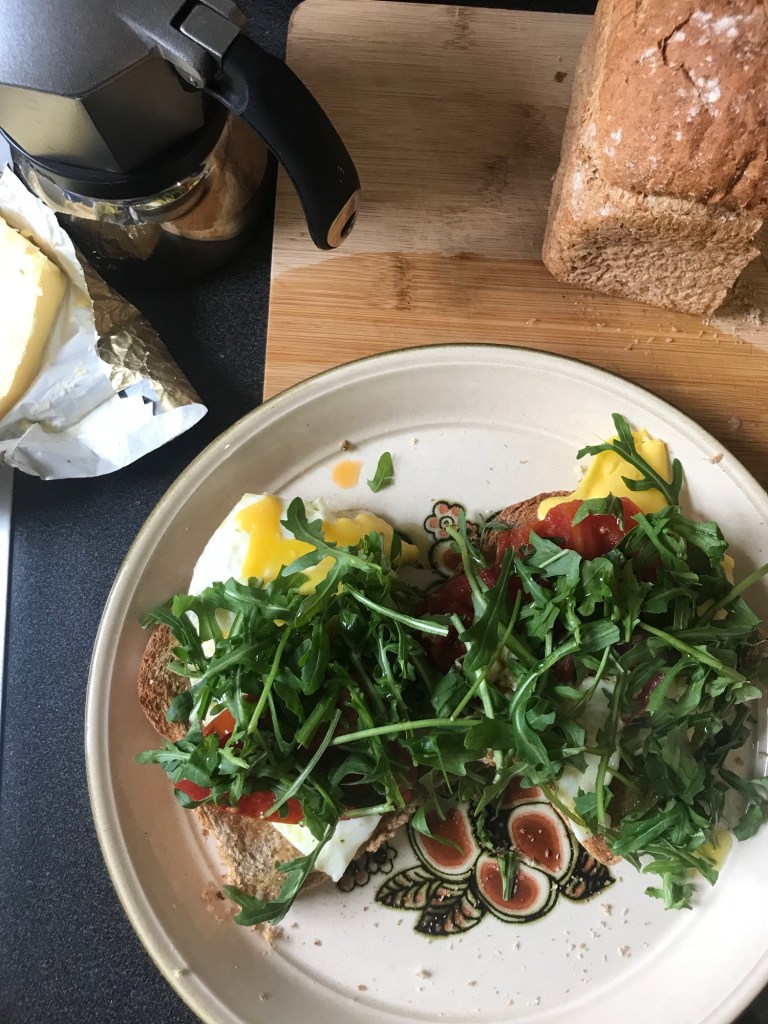
Hunger-saver leftover eggs.

Raw or partially cooked eggs have been absolutely banned from pregnant people and babies because of the Salmonella infection risk and so Tiramisu’ famously excluded from the diet of all my Italian relatives and friends and not just them. Uncooked or unpasteurized eggs have been on the list of foods to avoid in pregnancy until these new guidelines came out and typically mentioned by midwives at the end of the long antenatal booking appointment lifestyle advice between the top ones, besides blue cheese and raw meat. But now, most recent research suggests that, as long as they are marked with the Red Lion stamp, which means that the hens have been vaccinated for Salmonella and grown respectfully of certain UK dictated standards, eating eggs it is safe, even when eaten raw or partially cooked. They are not just safe, but also a simple, affordable, carbon release friendly, packed with nutrients and super versatile food which can enhance milk composition, pregnancy wellness and child nervous, immune system and bones development from conception until the 2 years of age. 

yes, it is a very “green” source of protein, when the hens are treated respectfully (up to you to choose what kind of eggs you put in your trolley). in a small amount it is contained plenty of nutrients, it takes less carbon release to produce them compared to other sources of animal proteins and they are between those foods that keep the proteins intact, or most of them, even after cooking.

What about the scary allergy risk? The pieces of research collected within the very recent systematic review by Emma Derbyshire published on the British Journal of Midwifery, highlights that developing single food allergy for babies of breastfeeding mothers that consumed eggs during the first few days after birth it’s small and similar findings apply to children been offered eggs between 4 to 6 months. It is also reassuring to know, according to the article, that most of the food allergies developed at that age tent to resolve by scholar age, only rarely it lasts until adulthood and, even when persistent, they are not detrimental for the child growth and development.

What is more dangerous, it is not eating them, particularly when instead of a healthy brunch made by poached eggs a bunch of greens and a slice of fragrant sourdough bread generously spread with a layer of vitamin D packed butter, you will call the breakfast done after having an ultra-processed plastic package unsealed chocolate muffin. According to E. Derbyshire’s article this is the real danger: a big 90% of women it’s not including in the diet most of the nutrients they should which are essential to sustain the pregnancy and the developing baby, preferring too often food that it is so processed that the amount of nutrients is extremely diluted to the point that they don’t really make a difference to the intake required during all childbearing stages.

So, what’s the deal with eggs’ so precious nutrients? Here is a list of some:

  • Vitamin D: essential for immune system and bone development 
  • Proteins: one egg will bring on board around the 28% of the daily protein recommended intake, essential for tissue growth 
  • An amazing amino acid (protein) called choline which is apparently super important to sustain a correct liver function and which is also one of the essential components that form neurons connections within the brain (central nervous system), muscles (peripheral nervous system) and organs (sympathetic and parasympathetic nervous system). Sounds like 2 eggs contain the 81% of the daily intake needed in pregnancy
  • Folates and vitamin B12, essential for the neural tube defects prevention

Just to list the key ones. Eggs also contain precious iodine, contributing to the normal growth of children and phosphorous, needed for bone growth and development. 

I hope this information might make the day to any pregnant and brunch fanatic egg lover and reassure, I hope, some anxious mom in the middle of a weaning child confusion (at least about eggs), and before returning to my mommy tasks I will give you my tips:

  • Always put those organic (biodynamic when possible) Red Lion marked eggs inside your shopping trolley, as soon as you run them out.
  • It’s amazing how many things you can do with eggs but please, go simple: you will find that having that couple of already boiled eggs in your fridge that you didn’t want to eat yesterday will save you from today’s breastfeeding hunger. 
  • Always, and I say, always put that bag of greens in your trolley. Doesn’t matter if it’s the already washed spinach and watercress salad or the fancy still covered in soil farm picked black kale, as long as you pick some. Greens match very well with eggs; they are super easy and quick to cook and they complete the range of nutrients that you need in pregnancy and breastfeeding and to prepare your baby’s first meals. They can be enhanced with a splash of vitamin C packed lemon juice (which will increase their iron and folates absorption as well), a dash of omega 3 packed EVO oil and a handful of seeds, for crunchiness and extra omega 3, so helpful when dealing with stress.
  • If you make a frittata, make it double! It’s amazing eaten cold the day after accompanied with a nice crunchy seasonal salad and some bread. Personally, I have a thing for it as it remembers me the typical day out lunch: “panino con frittata”, which was a must have during any school trip. 
5 minutes home made brunch 🙂

Safe Sleep and Comfort Strategies for Newborns: A Mother’s Insight

When I was pregnant with Claudia, I started looking for a second-hand bedside cot. Since when I was a student midwife and I was wondering through the pages of the Leboyer masterpiece “Birth without violence”, I started to embrace the idea of the importance to give the baby a chance to find a personal space and comfort, of course after and besides the vital skin to skin moment. I was fascinated by the interpretation that Leboyer gives about baby’s adaptation to extrauterine space where the newborn, after having experienced and enjoyed the softness and concavity of the maternal abdomen learns to stretch and unfold its back on the flat surface of the mattress, gradually learning the air element and learning to find a new way to perceive and move their body in the space. 

I liked the concept that baby is, from birth, entitled to their comfort zone and space away from the warmth and comfort of the parents’ body but close enough to hear and smell them, enough to feel safe and heard when needed. 

So, I got my white wood and fresh cotton second hand bedside cot from a lovely local family and I proudly got it home, assembled and then, few weeks before Claudia was born, disassembled again and washed top to toe, ready for the brand-new organic material mattress to be taken out of the plastic and laid on it, ready to receive my little cub.  

When Claudia was born, she was 2,960 kg. Since the very first breath she has been an alert and active little baby girl and she remained so throughout. Her body never felt floppy (apart from the heaven like deep snooze moments), instead, she would have a strong muscle tone, a very pronounced Moro reflex, and a wide range of movements including the capability to hold her head from the beginning of her life in this Heart. This meant that, when I was trying to lye her on the cot during the first 1-2 weeks, she would react as If she was a turtle lied upside down on the ground: she would retract her limbs and start rolling sideways, opening her blue-grey eyes a second after and staring at me with disappointment. 

Obviously that space was too wide for her to start with, and that surface too cold, too hard, too flat to accommodate her curved little spine. 

So here a fortunate charity shop deal came to play on our side: one of those mattresses with pillow circling the sides. She loved that one. The surface wasn’t that hard as the coconut fibre mattress and the space to be navigated by her tiny and unconfident body was not too wide and scary as the large cot. As midwives and health visitors came to visit me and found her peacefully asleep on that they very professionally started the plethora on how unsafe it was for me to let her sleep on that, listing me all the possible ways she could have managed to soffocate herself on it. Despite my sense of guilt was well nourished by those unrequested advices, my instinct and mother’s knowledge (also supported by the mattress label) was still telling me that it was okay. 

As everything in newborn’s life: nothing lasts for very long, so the cocoon mattress got stored under the changing station and now gradually forgotten as Claudia doesn’t fit in it anymore. 

Before having a baby, I never believed in the idea of rocking movement, I thought that babies don’t need to be rocked to sleep necessarily and that it would disturb them or making them more nervous. So, when my partner told me that we should have taken a rocking cot I was a bit sceptical. But then, since when she is here, I had to review my believes about it and I am now rocking pro, and I began to think it’s an essential element for babies’ comfort which explains why any adult has the innate instinct to start rocking immediately when holding a baby: it’s because it is exactly what they need! Movement, they need continuity from womb environment where everything was moving and sounds were on all the time. So, rocking it’s not spoiling but creating for them a comforting and reassuring space. 

Being a woman suffering with anxiety, a mother at 35 years old and being a midwife working for the NHS was going to be the recipe for safe sleep matter to really matter; something that inevitably generated in me a lot of thinking and, of course, overthinking. The first thing I am going to share about it, it’s how annoying it feels when you say to people that you are a midwife and you are also becoming a mother and everyone says – oh wow, you must know everything-. That’s the issue, that’s the tricky part. You know things, often you know many things about some topics and, hopefully, you are very knowledgeable and UpToDate about childbirth and tips on growing a healthy child. But the reality is that what the NHS gives you is guidelines based on research results: things that you learn by heart and you teach parents to do because that is the best advice available. But my point is: the best advice available, is it also the best advice for my child? The moment I realized that most of the anxiety went away, because it was replaced by the realization that yes, that is the advice based on the best evidence available but my baby actually behaves “this way”, my baby actually is able to do “this” and is able to communicate “this” to me. The other most inspiring words that I received during a moment of total despair phone call, talking about managing to rest while Claudia was sleeping during the first two weeks of her life, came from a beloved friend which is not a midwife, nor a mother, just a person that knows human’s nature a lot: – If you are sure that she is able to call you when she needs you, that she will give you the signals, then, you see? Then you can trust her! –. 

The moment I realized that I could trust my capability to observe my baby and assess her, and that my baby actually had some competences and a certain extent of autonomy and I could trust her, everything got a completely different colour and that overthinking was a bit reduced or, at least, it took a bit more sense. 

So, what your midwife is going to tell you is: – Put your baby lying down flat on her back, feet touching the edge of the cot, blanket under the armpits and tucked under the armpits, temperature between 19 and 22 degrees, avoid falling asleep with baby on your chest, if you want to do co-sleeping do it the right way -.  About the right way, there is a lot of conversation: whether putting baby on their back between parents ‘pillows, no duvets over them, no sleeping on pillows, no sleeping on cushions. Again, this might not always work but this is the recommendation that the mums are left with and expected to follow strictly but is that possible? 

And, what if I don’t follow the rules? Will then I put my baby at risk of dying from SIDS?

Being a mother and having the privilege of growing my own child gave me a totally different prospective to rethink safe sleep. 

First, every baby is different. So, to understand how my baby can sleep peacefully and safely so we, as parents can do the same, it means understanding my own baby features and needs. 

Sleeping habits have a lot to deal with feeding and digestion, so understanding how baby is digesting is key to have clues about how to help baby to find the right position to be able to fall asleep and to maintain a comfortable sleep position. In my case, my baby would feed very quickly, my milk flow has always been fast and Claudia always had a strong rhythmical suction. As result, she would empty both breasts within 10-15 minutes maximum. Even though this might seem wonderful and make you think fantastic then she will be quickly full and ready for a snooze this is not quite the case! In fact, what these kind of quick feeders need is a lot of care during and after feeds: first of all she chocked quite easily so all my attention and eye contact is needed during feeds (not that I have never been tempted scrolling Instagram or watching documentaries missing the beauty of her eye contact while feeding. Second, she needed to be immediately lifted after feeds, no pause allowed, back straight and a lot of winding round massages on her back. Especially during the first 3-4 weeks she was not always able to burp after the feeds, especially if she would fall asleep during it and this would particularly happen in nighttime. This was the root, or one of the roots, of the big issue of the trapped winds, or at least, this is how me and my midwives and health visitor were led to think. 

Trapped winds positions are then needed to ease and make her finally comfortable and ready to sleep and this means that falling asleep flat on her back after feeds it’s not going to be an option! A lying flat position for a baby with trapped winds it’s going to be a nightmare, as it makes very difficult for the air to move through the guts and out. In fact, if I tried to lye her down it looked as if a layer of needles suddenly appeared on the surface of the cot to generate a very sharp and heart-breaking cry, one night I even checked that there wasn’t anything hard or itching like labels or sharp buttons on her little pyjama making it impossible to lie her on her back. So, as they say, “you learn the hard way” , so those heartbreaking and endless unconsolable cries made me understand that I had to go around those lying flat recommendation and that that little tummy needed gentle pressure, warmth and lots of love and care to ease and cope during those weeks when the lactose digestion is still developing during the first 3-4 months. 

So here is my tips list: 

Talk! Talking to a friend, colleague midwife and mother of three helped me more than all the guidelines, systematic reviews, experts panels than I knew. A sensible point of vire from a person that you trust can be very powerful. It can reassure you about many things you were worried about and you didn’t have the clarity of mind due to tiredness and stress. Some advices might resonate on you and leading you to understand what it’s right for you and your baby. Other peoples’ experiences, listening to someone that has gone through exactly the same and had made it through is vital and motivational. And, finally, vital information can come out from those conversations. 

Give a chance to GPs!

Despite the bad reputation of approximate and sometimes useless GP consultation I can ensure you that most of them I spoke to are super knowledgeable and they might give you the right advice or at least an opportunity to talk through the problem which might itself lead you to the solution.

Upright positions are the key to help baby to soothe and start the falling asleep journey. “Frog hold” against the chest, with or without the sling is a good start.

Lots of massaging on the back, “clockwork” massaging on the tummy, gentle tapping on the bottom, bicycle movement of legs really helps. 

Be ready to change position! Remember, nothing lasts forever when comes to newborns life and everything can change by just changing the position and you might see them snoring while they were screaming with pain 2 seconds earlier. As the winds move inside your little one’s guts, they might need to move into a different position to help moving them along and out. So, if they are telling you that they became uncomfortable then do move them! “Airplane position” using one hand to support and massage the tummy is a good alternative. 

Be ready to walk and sing! Walking creates the movements for the digestion to get going and singing distracts the baby and helps them to cope. So, space for your fantasy and make up your lullabies  this will also relax you and boost your creative side. Lullabies work as mantra recitation: they abstract you from the outside and make you focus on the moment and time. They can represent an opportunity to observe your surroundings, describe, tell a story, in other words, it can be a little mindfulness experience for you too. You will find out is a lot more satisfying rather than searching for already made ones and your baby will like them a lot more, they will be unique! They will be your baby’s personal love and soothing songs. 

Once baby is asleep, enjoy that amazing body contact, sit down and just enjoy it for a little bit. No rush to put baby down, learn your unique baby deep sleep signals and only when you feel they are ready, then try lying them in different positions. 

Which position? The answer is, trust your instinct and your baby’s cues. For example: how did the baby fall asleep? Which side has they turn the head or rested the arm or legs and try to recreate that position as much as possible in the cot.

Assess your baby: is baby able to turn the head when chocking? Are they able to lift and turn the head when lying on the tummy? If so, it might actually be safe and soothing for them to sleep on the tummy for a little while, especially if you are awake.

The key is OBSERVE!!!

Give your baby a second chance: even if they seemed to be in the deepest sleep ever, it might have been a false alarm and open their sparkling irresistible eyes as soon as their heels and back touch the matters and watch you with a questioning expression as they wanted to say – What are you exactly trying to do Mother???-  That doesn’t mean that they don’t like their little cocoon at all, making you think that you will have to keep them sleeping either on you or in your bed for the rest of their life. It might just mean that they are not ready just yet, they might need another little cuddle, staying nice and tight with tummy kept warm by your body and your reassurance breath reaching their forehead to reassure them and walk them to a nice sleep soon. So, the trick is, enjoy that amazing look of their eyes, take a nice deep breath, even if you tired and desperate to lie down, pick them up again, surround them with a reassuring and soft hug within your arms and start your walk again. Continue your lullabies creative work and don’t think about time, just enjoy it and think that soon they might fall in deep sleep, this time probably a real one and you’ll be ready to get one as deep and restorative as they are.