
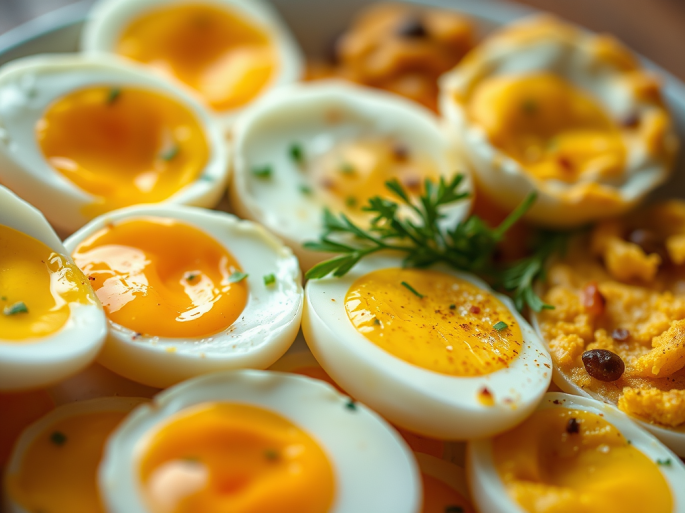
When I was pregnant with my Claudia, I was craving eggs all the time. I remember me rushing into the nearest Coop at the turning of 12 pm, I could not prolong my lunch later than that, to grab myself one of those ready-made Spanish tortillas and then swallowing most of it on my way back to the antenatal clinic, ignoring completely the serving portion recommendation of 1/4 portion per day energy, protein and fat intake on the label. And I remember me laughing a lot about my friend joke when I stopped at the little Waitrose along our car journey to the lake for one of my last pregnancy cold swimming days. – You basically have a hanging over person cravings! – she said, when I went back in the car carrying my eggs and cress sandwich and my sparkling water bottle. Yes, I did indeed! And I am learning how right I was following my selective hunger those days that was leading me to put eggs, eggs, gherkins (of course), and other eggs into my tummy.
Eggs are one of those big controversial foods that generated a lot of conversation about eating them vs. not eating them during pregnancy and breastfeeding and about offering vs. not doing so to children weaning to solid food. And most of the time, this big “no-no” that women receive it’s nothing more than a heritage from their relatives and friend eating culture and traditions with little or none research based reason to justify that choice. That not very smart choice I would say.
I will never forget my neighbor’s toddler seated on the classic weaning chair with the large white plastic board at the front and the fluffy resin covered sit where he was trying to bring the reduced to crumbles egg yolk (the orange part, I can never remember which is which) to his watering mouth. – Why do you give just the orange bit? – I asked curious to his mom. I was only 5 or 6 years old myself but childcare and nursing children was already super fascinating for me. – Because the white it’s toxic for babies -. Obviously, my neighbor was already aware about the higher likelihood of the albumen (the white part) to cause allergy. But toxicity, no, that was not so evidence based at all. The rule “not more than 2 eggs per week” has often been mentioned during those lunch conversations between unties and grandmothers since when I have memory, and the reason was that more than that would be dangerous for the liver. How funny to find out that it is actually the opposite! in fact eggs contain choline which is an important protein that supports liver function and that the recommended amount, according to latest research, it is two per day during pregnancy and breastfeeding and one per day for infants aged 1 to 3 years.

Raw or partially cooked eggs have been absolutely banned from pregnant people and babies because of the Salmonella infection risk and so Tiramisu’ famously excluded from the diet of all my Italian relatives and friends and not just them. Uncooked or unpasteurized eggs have been on the list of foods to avoid in pregnancy until these new guidelines came out and typically mentioned by midwives at the end of the long antenatal booking appointment lifestyle advice between the top ones, besides blue cheese and raw meat. But now, most recent research suggests that, as long as they are marked with the Red Lion stamp, which means that the hens have been vaccinated for Salmonella and grown respectfully of certain UK dictated standards, eating eggs it is safe, even when eaten raw or partially cooked. They are not just safe, but also a simple, affordable, carbon release friendly, packed with nutrients and super versatile food which can enhance milk composition, pregnancy wellness and child nervous, immune system and bones development from conception until the 2 years of age.
yes, it is a very “green” source of protein, when the hens are treated respectfully (up to you to choose what kind of eggs you put in your trolley). in a small amount it is contained plenty of nutrients, it takes less carbon release to produce them compared to other sources of animal proteins and they are between those foods that keep the proteins intact, or most of them, even after cooking.
What about the scary allergy risk? The pieces of research collected within the very recent systematic review by Emma Derbyshire published on the British Journal of Midwifery, highlights that developing single food allergy for babies of breastfeeding mothers that consumed eggs during the first few days after birth it’s small and similar findings apply to children been offered eggs between 4 to 6 months. It is also reassuring to know, according to the article, that most of the food allergies developed at that age tent to resolve by scholar age, only rarely it lasts until adulthood and, even when persistent, they are not detrimental for the child growth and development.
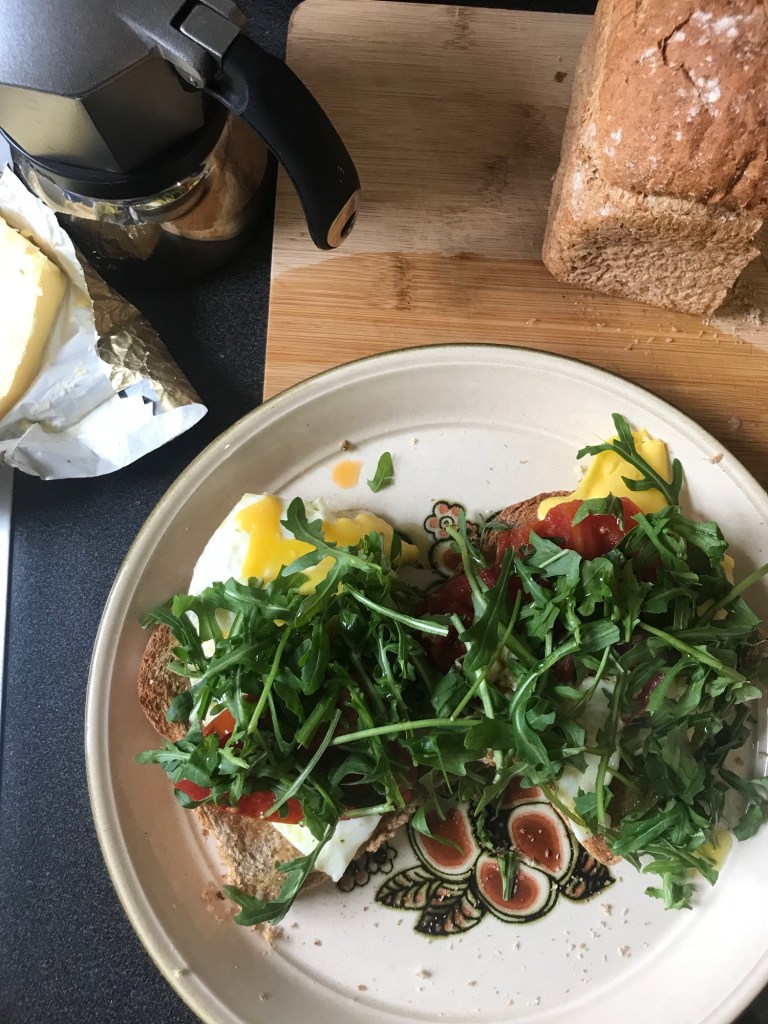
What is more dangerous, it is not eating them, particularly when instead of a healthy brunch made by poached eggs a bunch of greens and a slice of fragrant sourdough bread generously spread with a layer of vitamin D packed butter, you will call the breakfast done after having an ultra-processed plastic package unsealed chocolate muffin. According to E. Derbyshire’s article this is the real danger: a big 90% of women it’s not including in the diet most of the nutrients they should which are essential to sustain the pregnancy and the developing baby, preferring too often food that it is so processed that the amount of nutrients is extremely diluted to the point that they don’t really make a difference to the intake required during all childbearing stages.
So, what’s the deal with eggs’ so precious nutrients? Here is a list of some:
- Vitamin D: essential for immune system and bone development
- Proteins: one egg will bring on board around the 28% of the daily protein recommended intake, essential for tissue growth
- An amazing amino acid (protein) called choline which is apparently super important to sustain a correct liver function and which is also one of the essential components that form neurons connections within the brain (central nervous system), muscles (peripheral nervous system) and organs (sympathetic and parasympathetic nervous system). Sounds like 2 eggs contain the 81% of the daily intake needed in pregnancy
- Folates and vitamin B12, essential for the neural tube defects prevention
Just to list the key ones. Eggs also contain precious iodine, contributing to the normal growth of children and phosphorous, needed for bone growth and development.
I hope this information might make the day to any pregnant and brunch fanatic egg lover and reassure, I hope, some anxious mom in the middle of a weaning child confusion (at least about eggs), and before returning to my mommy tasks I will give you my tips:
- Always put those organic (biodynamic when possible) Red Lion marked eggs inside your shopping trolley, as soon as you run them out.
- It’s amazing how many things you can do with eggs but please, go simple: you will find that having that couple of already boiled eggs in your fridge that you didn’t want to eat yesterday will save you from today’s breastfeeding hunger.
- Always, and I say, always put that bag of greens in your trolley. Doesn’t matter if it’s the already washed spinach and watercress salad or the fancy still covered in soil farm picked black kale, as long as you pick some. Greens match very well with eggs; they are super easy and quick to cook and they complete the range of nutrients that you need in pregnancy and breastfeeding and to prepare your baby’s first meals. They can be enhanced with a splash of vitamin C packed lemon juice (which will increase their iron and folates absorption as well), a dash of omega 3 packed EVO oil and a handful of seeds, for crunchiness and extra omega 3, so helpful when dealing with stress.
- If you make a frittata, make it double! It’s amazing eaten cold the day after accompanied with a nice crunchy seasonal salad and some bread. Personally, I have a thing for it as it remembers me the typical day out lunch: “panino con frittata”, which was a must have during any school trip.
 giulia ciarapica, midwife