
This is a topic I have been wanting to talk about for a while but never had the gut to sit and do it. I kept procrastinating and using the little space preciously reserved for writing for something else. Probably it has been an attempt to walk far from what it has been for me such a soft spot. A delicate topic for both my personal and professional experience. You don’t go and touch what hurts, do you? But if you do it with compassion and care, that is a touch that may heal.
I took this fast-proceeding Christmas time to finally do it, as my gift to myself and my daughter, as a celebration of the gift and privilege that I felt when I “received” the milk to be able to feed my daughter.
My milk story
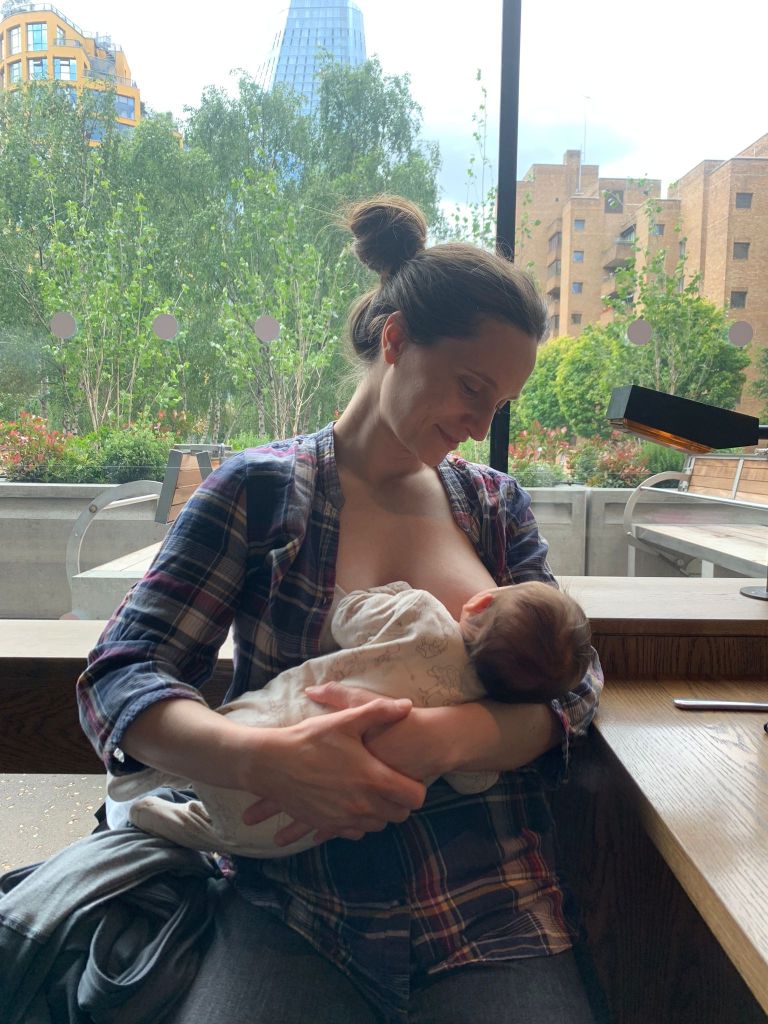
My milk story starts from a fear, a fear that originated long before I became pregnant with Claudia. Not sure exactly how and when it generated within myself the conviction that I wouldn’t have had milk, it could be a good session with my therapist to dig into. But somehow it did. When you are a child and you are told you have small breasts, you just believe it. Others’ spoken loudly (and not always polite) believes, comments and opinions are not kept a secret in small Italian village. And, when you are a child, other’s opinions easily become a truthful mirror to confront with, you just believe what you are told. You don’t have the maturity to take distance from other’s opinion, you may not have had a therapist or a very mindful parent to enlighten you about the fact that other’s opinions belong to them and find roots within their experience. Most times these speak more about them than about you.
Anyhow, it happened that every time I would watch a relative, a friend or a patient breastfeeding it felt for me like a privilege, like a party I would have never been allowed to take part. I had this image of the grace of a serene face baby receiving the milk directly from his mother’s breast. The peaceful connection, the eye contact. The gesture of emotional and physical nourishment that a mother makes when offering the breast to her child. I would look with admiration while nurturing the fear that it would have never been that easy for me.
Then time arrived for me when I became a mother myself, and the fear that looked so far away became a much closer threat. However, the physiologically induced effects of progesterone and prolactin came on my side: my breasts grew from the very beginning of the first trimester. I could observe, and welcome, my body gently expanding. A miracle. I was slower, heavier, sleepy all the time. It is like water element was prevailing within my body and permeating most my tissues. Yes, I knew breast tissue was growing. My breasts started becoming a different organ to the one they used to be, they were preparing for a different function.
On a certain day, the miracle became real. I was around 22 weeks pregnant and I was having one of those relaxing hot showers after an intense day at work. Without thinking too much about what I was doing I had the instinct to express my nipple a little bit. I had no expectation or too conscious sense of what I was doing, it was more an instinctual gesture. I saw a little golden drop coming out slowly, without even pressing too much. An emotion grew within my heart, behind my sternum. I felt a surge of joy pervading my body and tears came out of my eyes, mixing with the hot water of the shower. – I can feed my baby – I told to myself.
Few weeks after, Claudia was born, in the middle of the night, well before dawn, in the darkness of my bedroom, in the calm of my house. It finally came the time when I could experience her warm silky skin sliding against mine while crawling in search of my nipple. She looked like a little bird chick: eyes closed, open mouth, waving the head right to left, left to right, searching. Miracle, we didn’t even cut the cord yet but she knew exactly what she was doing. She was all instinct flowing; she didn’t need to know anything. The paramedics where still there as we were waiting for the placenta to come out. The gentle hands of my midwife helping me to latch her, as I asked for her to do it. And finally, the latch. That strong feeling of tightness. – you are so strong – I told her; I kept saying this to her since the labour started. That was the feeling she gave me, from the very first “real” labour contraction, I could feel her strength, her determination.
I could finally practice on myself the latching techniques I used to teach to other women for all my midwifery life. Reason why it was not difficult to latch her from the very beginning. I knew how to hold her, how to positioner to help her to latch, how to foster her natural movements, just to make it easier, and to avoid her to chew my nipple as little as possible, but to latch deeply down on to the areola.
What I couldn’t prevent or forecast was all the pain it came soon after. All the delicate parts of my body were hurting for several days. And it would hurt every time she would latch. And it would hurt a lot. I remember it being a lot even though a don’t remember the exact feeling. My species conservation hormonal mechanisms have already made me forget this. I remember one of my colleagues, also a breastfeeding mother of a 2-year-old and expert community midwife, coming home for my postnatal check and describing that feeling as being punched with a broken wooden stick. It was exactly that feeling. I regretted for having told to all my patients the midwifery book and guidelines’ story that the correct latch shouldn’t hurt. It is not like that for all women. As for most of the rest of the advice we give.
She also gave me another big tip that felt so true and mirrored so well what I was experiencing: – it is like your nipple skin is changing, it is scratching and nearly peeling off now but at the same time, it is regenerating to become something else. You will end up having no sensitivity when she latches-. It made so much sense. The evolution of my body, its metamorphosis that started the moment Claudia was conceived and implanted within my womb, was continuing. So, with the milk let down on day 3, my breast, as my colleague anticipated, reached soon the size of a summer melon, same consistency as well, to the point that I could not believe Claudia was able to latch to such a hard and tense surface, but she did. And the feeling of her emptying it, draining it, nearly completely, was the most relieving one, to the point that it compensated the needle scratch of the bite on my nipples.
It was times of runs home from the laundrette where me and my partner were trying to clean the blood spots of my bed covers left from the labour to my house as my breasts were exploding and dripping everywhere while Claudia was doing the longest nap ever, probably helped by the white noise of the washing machines and the traffic. Times during which I was always wet, pads everywhere. Pads continuously to be changed, in my breasts, in my nickers. Never spent so much time between toilet, bed, sofa in all my life. But eventually the next evolutionary step miraculously happened. I choose to commit to breastfeeding on demand and managed to avoid any expressing of any sort, despite having to deal with a very strong flow that made Claudia choke and cry quite often, especially when she wanted to suckle for comfort and not for hunger. Thanks to that commitment, Claudia gradually managed to self-regulate the quantity of milk she needed so I could say forever goodbye to the breast pads in about within about 40-45 days.
At the same time, I could pleasantly say goodbye to the nickers pads to. So, the summer ahead became much dryer, warmer. The element water rebalanced within my body and stopped being so prevalent. I could enjoy happily feeding my little one lying on fields, grass, river shores, beaches, benches, with my back rested on trees, back of the buggy, back of my partner. I mastered any imaginable reclined position with any possible position of the legs to save my back while allowing Claudia, and myself to feed comfortably. And I would never thank enough to the person that donated the breastfeeding pillow to that charity shop which sold it back to me for the most worthed £ 7,00 paid in my life.

Now Claudia has past 7 months and I am watching the clock for her not needing me to feed her anymore and only relying on food. It is a pain and, as much as waking up 2,3 or sometimes even 4 times at night is hard, it will be much harder to lose that cuddle moment of a feed on the couch, light deemed, on a rainy and messy afternoon. Breastfeeding has been also this, a pause to the frantic days, to the moments where you don’t know what other play to invent, when your fantasy is gone off together with your sleep deprived brain. When you finished up all the good cards and you have no joker to play to make her happy and entertained. You sit, make a warm drink, if you manage, leave the phone as far as you cannot see it lightening up. You aren’t there for no one apart from her.
Antenatal preparation counts
One of the most common questions I received during my pregnancy with Claudia it has been: does it help being a midwife? Does it make it easier? The answer to this it is very complex to me and I had to shorten it and adjust it depending on the context and the person I was asked. But the point I want to make here is that knowledge really helps. As midwives we know physiology. Physiology means the process that happens in our bodies to make it function in a certain way. Knowing childbirth physiology, I believe it is why being a midwife it helps being a mother. On the other side, being a midwife means knowing the pathology, meaning all the possible things that may not go well. This generates fears and anxiety that such situations may materialize in our experience. But when we don’t let the fear to take over, and instead, we use the fear to guide us in picking up the cues that something could go wrong and make a change, that is when our pathology knowledge plays on our side.
I believe that antenatal preparation must give this: an accessible knowledge of our mothering bodies, the mechanisms that make the lactation happens. This is why I would suggest picking up an antenatal class were they focus on developing self-awareness and trust in our bodies and mothering skills, which is essential for a healthy breastfeeding to establish.
On the other side, I would avoid taking part in classes where it is reiterated how difficult breastfeeding will be, how challenging, how sleep deprived they will be, how bad sore nipple can be.
Learning practical skills is also essential. As mentioned, knowing how holding and positioning baby to breast allowed me to make a smooth start. I think a good antenatal class should also aim to offer knowledge about how newborn physiology works, what can we do to help them digesting and sleeping well, how to sooth them, how to approach the crying baby. To me for example, being able to acknowledge a “physiological” cry due to blocked winds and being able to respond and soothe my baby effectively saved us from several unneeded hospital journeys.
Holistic approach
I suggest that the choice of feeding our child it should be an act of real freedom. This to me means freeing ourselves from images and adjectives we acquired during all our life about how breastfeeding should or shouldn’t be. These are going to limit or affect our experience which is individual and personal.
From the psychological point of view, how we feel about feeding our child finds roots within many aspects of our subconscious and is important we find a space where we can give room to these feelings, to talk about them, to process them without judgement.
Physically, we need to create the conditions for the process to start and develop. This means taking care of all aspects that make our bodies healthy: nutrition, self-massage, breathing, relaxation, mindfulness exercises. All these activities help keeping stress levels at minimum and foster the correct hormonal release levels, essential to start lactation.
Relationships are so important. It is important we connect to family members, friends, aunties, mothers, blood or life mothers, health professionals. We need to create a healthy community around us that can offer a support that is concrete, free of interests and judgement. And to be able to choose and nurture such relationships in a healthy way we need to nurture trust within ourselves. We need to nurture compassion for ourselves, curiosity of observing how our bodies are capable to change, to blossom, to become something we couldn’t believe they could. We need to learn giving ourselves trust, hope and love.
 giulia ciarapica, midwife